

A motor controller has a direct effect on how an electric forklift starts, moves, lifts, and brakes. Yet controller selection is often reduced to one number, usually voltage or current. Problems only appear later, when the truck feels weak at low speed, loses performance under load, runs hot, or fails to communicate properly with the vehicle system.
A better approach is to look at the whole powertrain. The battery, motor, controller, traction system, lift pump, feedback devices, and CAN communication all need to work as one system. Once these requirements are clear, it becomes much easier to choose a controller that fits the forklift rather than forcing the forklift to fit the controller.
What Does a Motor Controller Do in an Electric Forklift?
An electric forklift takes power from the battery and uses a controller to regulate the motor. The controller determines how much current and torque the motor receives at each point in the operating cycle.
For traction, the controller manages:
- Acceleration and deceleration
- Forward and reverse movement
- Motor speed
- Starting torque
- Regenerative braking
- Response to changing loads
The lifting system has different needs. A hydraulic pump may need high torque at low speed when the forks start lifting a heavy pallet. A suitable forklift lift pump controller needs to handle this load without making the lifting motion too abrupt.
The key point is simple. A forklift controller is not only there to make the motor turn. The controller has to deliver predictable torque across very different working conditions.
Traction Controller or General Motor Controller?
A general motor controller may control speed and torque well in a fixed industrial application. A forklift traction controller has a tougher job because vehicle load, road conditions, braking, and operator input can change within seconds.
For example, starting on a ramp with a full pallet creates a very different demand from moving an empty truck on a warehouse floor. The controller has to respond to both situations without sacrificing control.
| Feature | General Motor Controller | Forklift Traction Controller |
|---|---|---|
| Speed control | Common | Essential |
| Torque control | Application dependent | High priority |
| Regenerative braking | Application dependent | Important |
| Variable load operation | Limited consideration | Core requirement |
| Low speed control | Depends on application | Very important |
| Vehicle communication | May be limited | Usually important |
| Rapid load changes | Moderate demand | Frequent demand |
This is why traction controller or inverter selection should focus on actual vehicle operation, not just rated motor power.
Low speed behavior deserves special attention. Forklifts often work in narrow aisles, so smooth torque control during starts, stops, and direction changes can matter more than maximum speed.
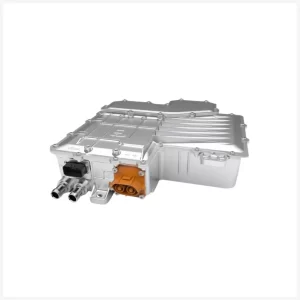
PMSM vs. Induction Motor Controller for Electric Forklifts
PMSM and induction motors can both be used in electric forklift systems. The right choice depends on the vehicle design, duty cycle, efficiency target, available motor platform, and project cost.
PMSM motors use permanent magnets to establish the rotor magnetic field. Induction motors create the rotor magnetic field through electromagnetic induction.
| Factor | PMSM | Induction Motor |
|---|---|---|
| Efficiency | Generally high | Generally high |
| Power density | High | Moderate |
| Low speed torque | Excellent with suitable control | Good with suitable control |
| Permanent magnets | Required | Not required |
| Control requirements | More involved | Relatively straightforward |
| Typical strength | Efficiency and compact design | Robustness and established design |
| Good fit | Efficiency focused systems | Cost and ruggedness focused systems |
The controller must match the motor and its control method. A mismatch can show up as unstable torque, poor low speed response, or higher energy consumption.
For this reason, PMSM vs. induction motor controller should not be treated as a simple winner and loser comparison. The better choice depends on the complete vehicle system.
What Should You Look for in an Electric Forklift Motor Controller?
Once the motor type is clear, controller selection becomes much more practical. Start with the following specifications.
Battery Voltage and Current
First, confirm the battery voltage and the expected current demand.
Pay attention to:
- Rated DC voltage
- Peak input voltage
- Continuous output current
- Peak output current
- Rated output power
- Peak output power
For example, GTAKE D09 is designed for a 108 V platform. The controller has a rated input voltage of 108 V DC and a peak input voltage of 130 V DC. Rated output power is 15 kW and 15 kW, with a rated output current of 140 A RMS.
Peak demand also matters during starting, climbing, or lifting. D09 provides 350 A RMS peak output current for traction and 350 A RMS for lift, with a duration of one minute. Peak output power is 35 kW and 35 kW.
Motor Type and Feedback
Always confirm motor compatibility before finalizing the controller.
Common motor types include:
- PMSM
- Induction motor
- BLDC
Feedback devices also need to match the controller. D09 supports PMSM, IM, and BLDC motors, with magnetic position encoders including TLE5012B E1000 and AS5047D. Supported temperature sensors include KTY84, PT1000, and NTC.
Sensor compatibility matters during commissioning. A controller may have enough power on paper but still perform poorly when the feedback system is not configured correctly.
Speed and Torque Response
Forklifts spend a lot of time operating at low speed. Strong starting torque and predictable response are therefore more useful than a large peak speed number.
Look at:
- Starting torque
- Torque response
- Speed range
- Speed accuracy
- Torque accuracy
D09 specifies 200 percent starting torque at 0 Hz, torque response below 5 ms, a speed range of 1:1000, speed accuracy of plus or minus 0.02 percent, and torque accuracy of plus or minus 5 percent.
These figures should still be checked against the actual motor and load profile. A controller specification only becomes meaningful when the complete drive system is properly matched.
Thermal and Environmental Protection
Forklifts can run for long shifts with frequent starts, stops, lifting cycles, and direction changes. Repeated high current operation can create more heat than a short peak load.
Check:
- Operating temperature
- Cooling method
- IP rating
- Humidity
- Altitude
- Protection functions
D09 uses natural cooling and has an IP67 protection rating. The specified ambient temperature range is minus 40 degrees Celsius to 55 degrees Celsius, with operation specified from sea level to 2,000 meters.
The installation environment still matters. Controller performance depends on airflow, mounting conditions, actual duty cycle, and the surrounding temperature.
Why CAN Bus Communication Matters in Electric Forklift Motor Control
A modern electric forklift rarely relies on the controller alone. The controller may need to exchange data with the vehicle control unit, battery system, display, sensors, and other electronic modules.
CAN bus motor control can be used for:
- Speed commands
- Torque commands
- Motor status
- Fault information
- Battery information
- Diagnostic data
Good communication design makes integration easier during both development and service. Fault information is especially useful because technicians can trace electrical problems without relying only on mechanical symptoms.
For OEM projects, CAN communication should be confirmed early. Network settings, signal definitions, I/O requirements, and controller logic all need to match the vehicle architecture.
Traction and Lift Control: Do You Need Separate Controllers?
The traction motor and lift pump do very different jobs.
The traction system moves the forklift. The lift system supplies hydraulic power for the mast and forks. Both systems can create high torque demand, but the timing and duty cycle are different.
Traction Motor Control
A traction controller needs to handle:
- Starting from rest
- Acceleration
- Direction changes
- Ramp operation
- Regenerative braking
- Changing vehicle loads
Smooth torque matters here because sudden changes can make the truck harder to control.
Lift Pump Motor Control
The lift pump usually works at lower speed and can demand substantial torque when lifting a heavy load. A suitable forklift lift pump controller must therefore handle current demand while keeping fork movement predictable.
Some systems use separate controllers, while others use a controller platform designed for both traction and lift functions. D09 supports both applications and provides separate peak output current ratings for traction and lift.
The better arrangement depends on the forklift architecture, available space, wiring strategy, service requirements, and control logic.
How to Match the Motor Controller With the Forklift Powertrain
A practical selection process can be done in a few steps.
- Confirm the battery voltage. Check the nominal and peak DC voltage.
- Identify the motor type. Confirm whether the forklift uses PMSM, induction motor, or BLDC.
- Check continuous current. Use the real working load instead of relying only on the motor nameplate.
- Check peak current. Starting, climbing, and lifting can create short periods of high demand.
- Review the duty cycle. Frequent operation at high load can increase thermal stress.
- Confirm feedback devices. Check position and temperature sensor compatibility.
- Confirm CAN communication. Review network requirements and vehicle control signals.
- Check the working environment. Consider temperature, water, dust, vibration, humidity, and altitude.
This process helps avoid a common mistake: choosing a controller that looks suitable on paper but does not fit the way the forklift actually works.
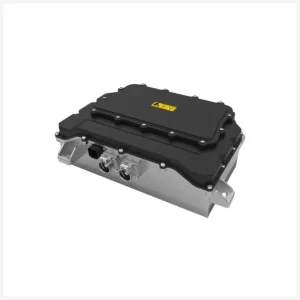
Common Electric Forklift Motor Controller Problems
Many forklift problems can look mechanical at first. A closer look often points back to controller settings, feedback, current limits, or communication.
Forklift Loses Power Under Load
Check battery voltage drop, controller current limits, thermal protection, and motor parameters. A controller may reduce output when operating conditions reach a protection threshold.
Poor Low Speed Performance
Start with motor feedback and torque settings. Sensor selection, parameter configuration, and control tuning can all affect low speed operation.
Motor Controller Overheats
Look at duty cycle, ambient temperature, installation space, cooling conditions, and repeated overload events. A controller may handle a short peak well but struggle when the same load occurs continuously.
CAN Communication Faults
Check CAN wiring, communication parameters, node settings, and fault messages. A communication fault can stop the controller from receiving the correct speed or torque command.
Why GTAKE Is Relevant to Electric Forklift Motor Control
GTAKE began research and development in AC drives and EV and HEV motor controllers when the company was founded in September 2009. The company now develops motor control products for industrial automation and electric vehicle applications.
For a 108 V forklift platform, D09 provides a useful example of how controller specifications can be matched to traction and lifting requirements. The controller supports PMSM, IM, and BLDC motors, multifunctional I/O, IP67 protection, and natural cooling.
For broader vehicle applications, GTAKE also provides an EV controller solution portfolio. More information about the company’s development capabilities is available through the R&D capability page.
Electric Forklift Motor Controller Selection Checklist
Before selecting a controller, check the following:
- Battery voltage
- Continuous current
- Peak current
- Motor type
- Starting torque
- Speed range
- Feedback sensor
- Traction demand
- Lift pump demand
- CAN communication
- Cooling method
- IP protection
- Operating temperature
- Vehicle integration requirements
A short checklist can prevent specification mistakes before prototype testing starts.
Frequently Asked Questions About Motor Controllers
What does a motor controller do in an electric forklift?
A motor controller regulates the electrical power delivered to the motor and manages speed, torque, direction, braking, and protection functions.
What is the difference between a traction controller and an inverter?
An inverter describes the power conversion function used to control a motor. A traction controller is designed specifically for vehicle movement and the changing loads found during driving.
Is PMSM better than an induction motor for an electric forklift?
Not in every application. The right choice depends on efficiency targets, duty cycle, vehicle design, cost, and the available motor platform.
What is a forklift lift pump controller?
A lift pump controller regulates the motor that drives the hydraulic pump used for lifting and lowering the forks.
Why is CAN bus important for forklift motor control?
CAN communication allows the controller to exchange commands, status information, and fault data with other vehicle systems.
How do I choose the right electric forklift motor controller?
Start with battery voltage, motor type, continuous and peak current, duty cycle, feedback, communication, thermal requirements, and actual traction and lifting loads.
Conclusion
Choosing the right motor controller starts with the forklift as a complete system. Battery voltage, motor type, torque demand, traction performance, lifting requirements, thermal conditions, feedback, and CAN communication all need to match.
The most useful controller is not necessarily the one with the largest headline specification. A better choice is one that fits the real load profile, operating environment, and vehicle architecture. For a 108 V forklift platform, GTAKE D09 controller provides a practical example for evaluating these requirements.