

Choosing the right AC Drive for a spindle can be difficult. A Spindle Servo Drive and a Vector Control Drive can both control motor speed and torque, but they serve different applications.
For CNC equipment, the choice affects speed regulation, torque response, spindle positioning, machining performance, and system cost. A servo drive is not always necessary, while a vector drive may not provide enough control for demanding spindle applications.
The key is to match the drive to the machine’s actual requirements.
What Is a Spindle Servo Drive?
A Spindle Servo Drive is designed for high-performance spindle control. It typically works with an encoder to provide closed-loop speed and position feedback.
The drive continuously compares commanded and actual motor speed. It then adjusts the output to maintain accurate spindle operation, even when the cutting load changes.
How Does a Spindle Servo Drive Work?
A typical spindle servo system includes:
- Servo drive
- Spindle motor
- Encoder
- CNC or motion controller
Encoder feedback allows the drive to monitor spindle speed and position in real time. This supports functions such as precise speed control, spindle orientation, and axis synchronization.
When Is a Spindle Servo Drive a Good Choice?
A spindle servo drive is well suited to applications that require:
- High-speed spindle operation
- Fast acceleration and deceleration
- Precise speed regulation
- Spindle orientation
- Rigid tapping
- Spindle synchronization
- Stable control under rapid load changes
For example, a machining center may need the spindle to stop at a specific angle during automatic tool changing. In this case, position feedback is essential.
What Is a Vector Control Drive?
A Vector Control Drive controls motor torque and flux independently. Compared with basic V/f control, it provides better torque response and speed regulation, especially under variable loads.
Many vector drives can operate without an encoder. This reduces system complexity while maintaining strong motor control for many industrial applications.
How Does Vector Control Work?
Vector control uses motor parameters and current feedback to regulate torque and magnetic flux separately. The drive can respond quickly when motor speed or load changes.
Typical benefits include:
- High starting torque
- Stable speed regulation
- Fast torque response
- Good low-speed performance
- Strong overload capability
- Reduced control system complexity
GTAKE’s GK310 uses open-loop vector control for asynchronous and synchronous motors. It provides 150% starting torque at 0.25 Hz, making it suitable for applications with demanding starting and load conditions.
When Is a Vector Control Drive a Better Choice?
A vector drive is a good fit when the machine mainly requires reliable speed and torque control rather than precise spindle positioning.
Common applications include:
- Material handling
- Pumps
- Textile machinery
- Conveyors
- General industrial machinery
- Variable-load equipment
For these applications, a vector drive can deliver the required motor performance without the hardware and commissioning requirements of a full servo system.
Spindle Servo Drive vs Vector Control Drive: What Is the Difference?
The main difference is the level of control required by the application.
| Factor | Spindle Servo Drive | Vector Control Drive |
|---|---|---|
| Control method | Closed-loop | Open-loop or closed-loop |
| Encoder feedback | Commonly used | Not always required |
| Speed regulation | Very high | High |
| Position control | Yes | Limited or application-dependent |
| Dynamic response | Very high | High |
| Low-speed performance | Excellent | Very good |
| Spindle orientation | Suitable | Application-dependent |
| Rigid tapping | Well suited | Application-dependent |
| System complexity | Higher | Lower |
| Cost | Generally higher | Generally lower |
| Typical application | Precision spindle control | Industrial motor control |
The difference is not simply servo vs. vector. Modern vector drives can provide strong dynamic performance, and some support closed-loop operation. Selection should be based on feedback requirements, motor type, load profile, control accuracy, and machine functions.
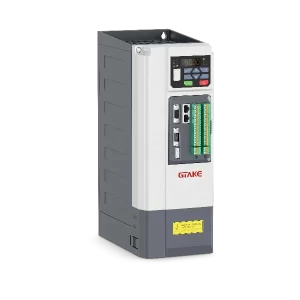
Spindle Servo Drive vs Vector Control Drive for CNC Machines
CNC spindle requirements vary by machine type and machining process.
For High-Speed CNC Machining
High-speed machining requires stable spindle speed and fast response to speed commands and load changes.
A Spindle Servo Drive is often the better choice when the machine requires tight speed regulation, rapid acceleration, or stable spindle performance at high RPM.
GTAKE’s GK900M Series is designed for CNC spindle applications requiring high-performance speed and torque control.
For Heavy Cutting and High Starting Torque
Heavy cutting creates significant and often rapid load changes. In these applications, low-speed torque and overload performance can be more important than spindle positioning.
A high-performance Vector Control Drive can be a practical option when the machine does not require precise spindle positioning. GTAKE’s GK310 provides 150% starting torque at 0.25 Hz and up to 200% overload for 0.5 seconds.
For Rigid Tapping and Spindle Synchronization
Rigid tapping requires the spindle to stay synchronized with the feed axis. The control system must track spindle position as well as speed.
For this type of application, a Spindle Servo Drive with encoder feedback is generally more suitable.
For CNC Retrofit Projects
CNC retrofit projects require careful evaluation of the existing system. Check the motor, encoder, CNC controller, communication interface, wiring, mounting space, and available I/O before selecting the drive.
A vector drive may be enough when the spindle only needs speed and torque control. A servo system is more appropriate when the retrofit also requires positioning or axis synchronization.
Which Drive Should You Choose?
Start with the machine’s most demanding function.
Choose a Spindle Servo Drive If You Need
- Precise spindle positioning
- Rigid tapping
- Fast dynamic response
- Encoder feedback
- Spindle synchronization
- Consistent control during precision machining
This makes a servo spindle drive a strong fit for machining centers, CNC lathes, and other precision machine tools.
Choose a Vector Control Drive If You Need
- High starting torque
- Stable speed and torque control
- Lower system complexity
- Cost-effective motor control
- Reliable operation under changing loads
- No strict requirement for spindle positioning
For many industrial machines, a vector drive provides sufficient performance without the added cost and complexity of a servo system.
Key Factors to Consider Before Buying an AC Drive
Do not select a drive based on motor power alone. Check the complete operating conditions first.
Motor Type and Power Rating
Check the motor type, rated voltage, current, power, and maximum speed. The drive must be correctly matched to the motor and application.
Speed and Torque Requirements
Define the operating speed range and torque demand. Pay particular attention to low-speed torque, peak torque, acceleration, and overload conditions.
Feedback and Encoder Requirements
Determine whether the application needs closed-loop speed control or position feedback. Spindle orientation and rigid tapping generally require more precise feedback.
CNC Controller and Communication
Check compatibility with the CNC controller, encoder interface, communication protocol, I/O, and control commands. These details can affect commissioning time and system reliability.
Installation and Maintenance
Also consider cabinet space, cooling, EMC, cable routing, commissioning, and service access. A drive with suitable electrical performance should also fit the machine’s installation conditions.
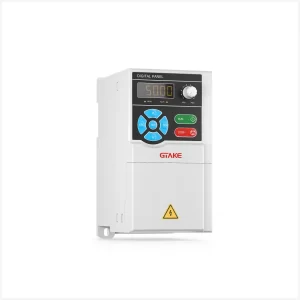
GTAKE AC Drive Solutions for Different Applications
Drive selection should follow the machine’s requirements, not the product name alone. GTAKE provides AC Drive solutions for CNC machines and other industrial equipment.
GK900M Spindle Servo Drive for CNC Machine Tools
The GK900M Series Spindle Servo Drive is designed for CNC spindle applications that require precise speed, torque, and positioning control.
It can support demanding spindle functions where encoder feedback and fast response are critical.
GK310 High Performance Vector Control AC Drive
The GK310 High Performance Vector Control AC Drive uses open-loop vector control for high-performance motor applications.
Its high starting torque, overload capability, and flexible control functions make it suitable for industrial equipment that requires strong speed and torque control without full servo positioning.
You can also explore GTAKE’s AC Drive and Four Quadrant Drive portfolio and industrial solutions.
For CNC applications, see the CNC Machine Solution. GTAKE also provides solutions for Crane & Hoist, Elevator & Escalator, Metal Wire Processing, Bending Machines, Cutting Machines, Roll Slitting, and Winding and Rewinding.
Frequently Asked Questions About Spindle Servo Drives and Vector Control Drives
What is the difference between a spindle servo drive and a vector control drive?
A spindle servo drive typically uses closed-loop feedback for precise speed and position control. A vector drive can provide strong speed and torque control with a simpler system, especially in open-loop operation.
Can a vector control drive be used for CNC spindle control?
Yes. It can be used when the spindle mainly requires speed and torque control and does not need advanced positioning or synchronization functions.
Is a spindle servo drive better for high-speed CNC machining?
It can be, especially when the machine requires fast response, tight speed regulation, or spindle synchronization. The final choice still depends on the motor, load, controller, and machining process.
Does a vector control drive require an encoder?
No. Many sensorless vector drives operate without an encoder. Closed-loop vector control can also be used when feedback is required.
Which drive is better for rigid tapping?
A spindle servo drive is generally better suited to rigid tapping because the control system can use spindle position feedback for synchronization.
Is a spindle servo drive more expensive than a vector control drive?
Generally, yes. A servo system may require an encoder and additional control hardware, while a vector drive can provide strong motor control with a simpler configuration.
Conclusion: Choose the Drive Based on Your Application
There is no universal best AC Drive for spindle control. Choose a Spindle Servo Drive when you need precise positioning, fast response, rigid tapping, or spindle synchronization. Choose a Vector Control Drive when strong speed and torque control are the priority and advanced positioning is not required.
Before making a decision, check the motor, speed range, torque demand, feedback, CNC interface, and communication requirements. Then select the drive that matches the machine rather than paying for functions you do not need.
Explore GTAKE’s AC Drive solutions to compare products and application options for your machine.