Email
Online Service

Motor controller – Low speed passenger car drive solution

GTAKE develops EV motor controllers and EV motor control units for different electric mobility applications, including electric passenger vehicles, commercial vehicles and special-purpose vehicles. The controller portfolio supports different vehicle power and voltage platforms, with modular architectures designed to simplify integration into different electric vehicle drive systems.

The low speed passenger car drive solution is designed for the electric drive systems of pure electric passenger vehicles, logistics vehicles and special vehicles. The current solution specification defines a rated electric drive power range of 13kW to 40kW and a battery DC voltage range of 50V to 180V.

For different vehicle configurations, the solution can support permanent magnet synchronous motors and AC asynchronous motors. GTAKE also applies modular N+N architectures to its new energy vehicle controller solutions, supporting configurations such as a single master drive, a master drive with multiple auxiliary units, and combinations of multiple accessory drives.

As a key component of the vehicle powertrain, the low speed EV motor controller regulates the electrical power delivered from the battery to the traction motor according to vehicle control signals and motor operating conditions. This allows the controller to coordinate motor speed, torque and power output while communicating with the vehicle management system.

Low Speed Electric Vehicle Applications

The low speed electric vehicle motor controller solution is intended for electric vehicles that require compact motor control, flexible battery-voltage matching and stable operation across different driving conditions.

Typical applications include:

  • Pure electric passenger vehicles
  • Electric logistics vehicles
  • Electric special-purpose vehicles
  • Low-speed commercial mobility vehicles
  • Other compact electric vehicles with compatible voltage and power requirements

For vehicle manufacturers, the solution can be configured around the required battery voltage, drive-system power, motor type and vehicle control architecture.

Electric Vehicle Drive System

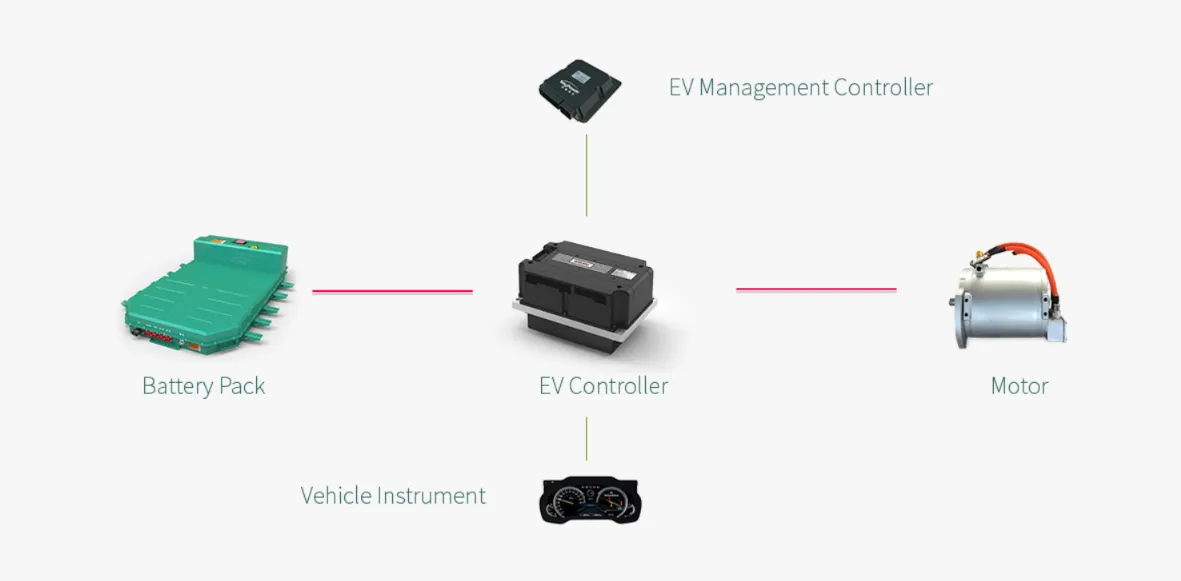
A typical electric vehicle drive system integrates the battery pack, EV controller, traction motor, EV management controller and vehicle instrument.

Battery Pack → EV Controller → Motor

The battery pack supplies DC electrical power to the drive system. The EV motor controller converts and regulates this electrical power according to vehicle control commands and motor feedback, controlling the motor’s speed and torque.

The EV Management Controller provides vehicle-level control and communicates operating requirements to the drive system, while the Vehicle Instrument provides the driver with relevant vehicle operating information.

Through this architecture, the EV motor control unit acts as the key power-control interface between the battery and traction motor, helping achieve smooth motor operation, responsive torque output and coordinated vehicle control.

Vehicle Integration Considerations

When integrating a low speed electric vehicle motor controller, vehicle manufacturers should consider the complete electrical and mechanical system rather than controller power alone.

Important parameters include battery DC voltage, motor type, required rated and peak output, motor position feedback, cooling method, communication requirements and controller protection level.

The controller should be matched with the battery pack and traction motor before finalizing the vehicle drive architecture. This helps ensure that the electric vehicle motor controller, battery system and motor operate within their specified electrical and thermal ranges.

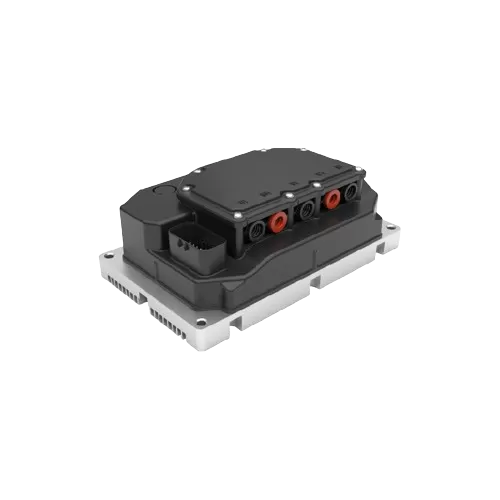
G05 EV/HEV Motor Controller

Program Features

  • Automotive-grade hardware and modular software: The EV motor controller uses automotive-oriented hardware with a compact and lightweight design. The modular software architecture integrates protection and fault-management functions for different electric vehicle applications.
  • Smooth dynamic motor control: Advanced motor control algorithms help reduce motor vibration and provide smooth operation under different speeds and road conditions. This is particularly relevant for electric passenger vehicles, where smooth acceleration and deceleration directly affect driving comfort.
  • Stable torque output across the speed range: The controller provides controlled torque output across the motor operating range, including the constant-power region, supporting acceleration and different road-load conditions.
  • Efficient electric drive operation: The solution provides high-efficiency motor control to reduce unnecessary electrical losses in the drive system. The stated system efficiency can reach up to 94%, while more than 60% of the efficiency area is above 85%, according to the existing solution specifications.
  • Integrated control and protection functions: The solution supports speed limiting, temperature adaptation, short-circuit protection, over-current and over-voltage protection, over-temperature protection, overload protection, communication fault management and battery feedback adjustment.
  • IP67 protection: With protection up to IP67, the electric vehicle motor controller is designed for vehicle environments where the controller may be exposed to dust, water and changing environmental conditions.

System Functions

The electric vehicle drive system connects the battery pack, EV controller, traction motor and vehicle-level control components into one coordinated architecture.

The main system functions include:

  • Battery DC power supply to the EV controller
  • Controlled electrical power output to the traction motor
  • Motor speed and torque regulation
  • Communication with the EV Management Controller
  • Vehicle operating information through the Vehicle Instrument
  • Electrical and thermal fault monitoring
  • Protection and fault-management functions

The system can be configured for different low-voltage battery platforms and traction motor requirements, allowing the EV motor control unit to be integrated into different low-speed passenger vehicle, logistics vehicle and special vehicle platforms.

Motor Compatibility and Control

The low speed EV motor controller can be configured for different traction motor requirements. The solution supports both permanent magnet synchronous motors and AC asynchronous motors, giving vehicle manufacturers flexibility when selecting the motor and powertrain architecture.

Key control considerations include:

Motor speed control: Regulates motor operating speed according to vehicle driving requirements.

Torque control: Controls motor torque to support vehicle acceleration, load changes and climbing conditions.

Power control: Adjusts electrical power delivered to the motor according to battery and vehicle operating conditions.

Protection management: Monitors electrical and thermal conditions and activates the corresponding protection strategy when abnormal operating conditions occur.

GTAKE’s current EV Motor Control Unit portfolio similarly positions its controllers around motor speed, torque, direction, power output and regenerative braking control.

Motor controller - Low speed passenger car drive solution

Related Products

The D03 E-Motorcycle Dedicated Motor Controller supports a 72V rated battery voltage and up to 10kW output power. It is designed for compact electric mobility applications including electric motorcycles, scooters, golf carts and sightseeing vehicles.

D03 supports synchronous and asynchronous motors, CAN communication, multiple I/O terminals and IP67 protection, providing a compact motor-control option for compatible low-voltage electric vehicle applications.

Need Help? Send a WhatsApp message now

Click one of our representatives below

James
James

Marketing Support

Tonny
Tonny

Marketing Support

Frank
Frank

Marketing Support

Victor
Victor

Marketing Support

CHOOSE YOUR LANGUAGE
TYPE TO SEARCH

Fax:+86 755 86392625
Tel:+86 755 86392623
Tel:+86 755 86392601
Email:info@gtake.com.cn