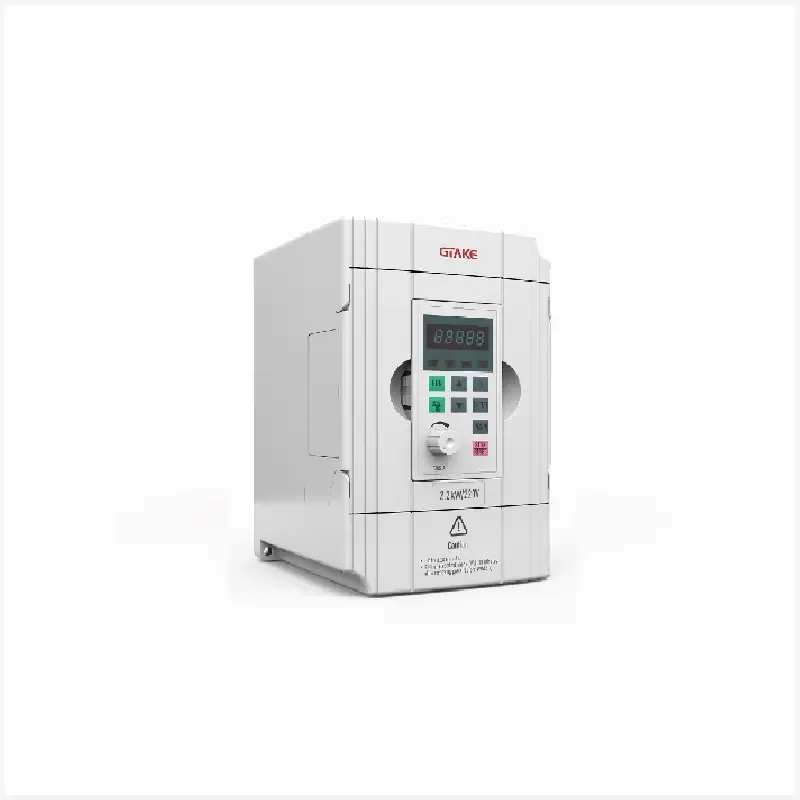
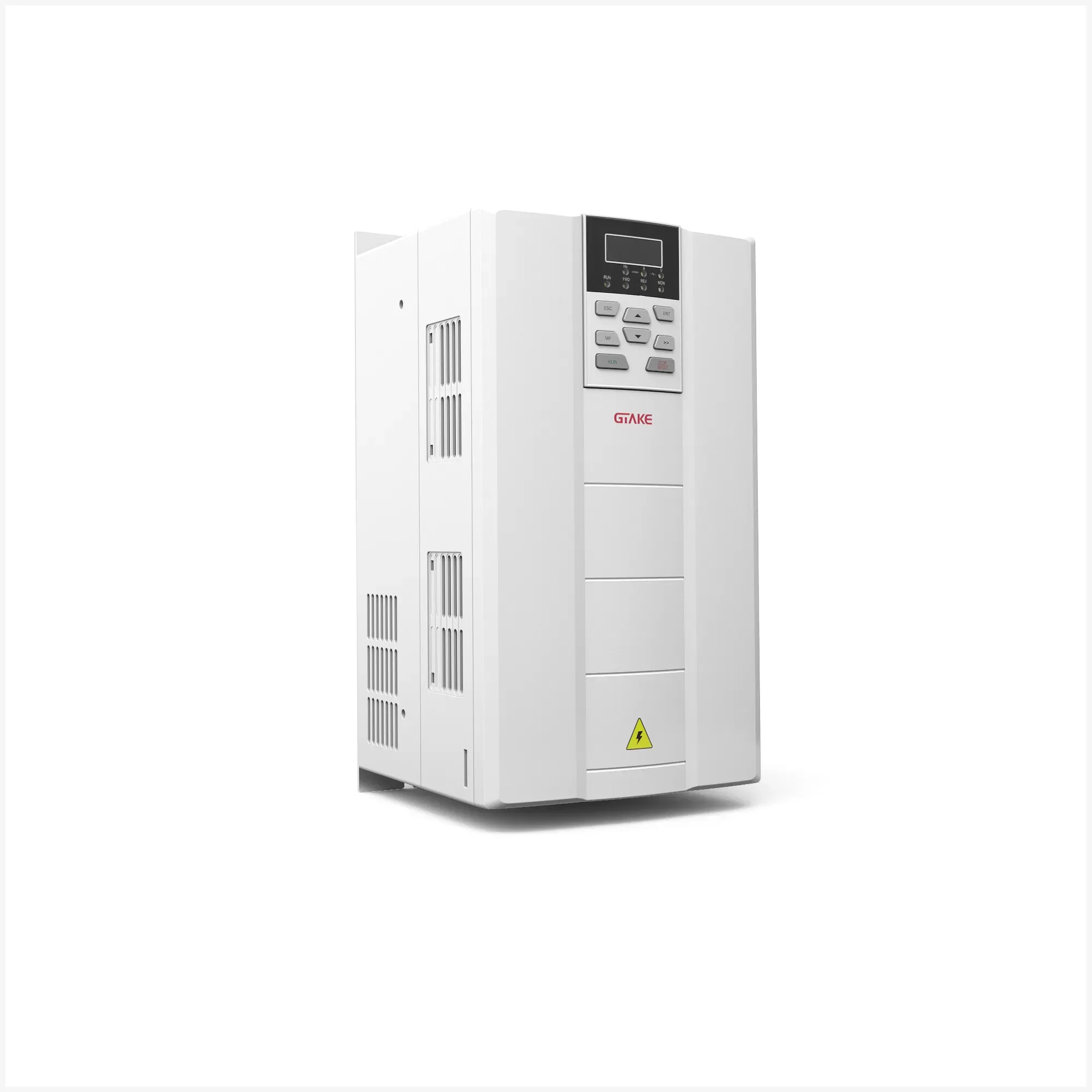
A variable frequency drive inverter is used when an AC motor needs to run at different speeds instead of operating continuously at the fixed frequency of the power supply. By regulating the electrical output delivered to the motor, a VFD inverter can adapt motor operation to the requirements of the machine.
This type of frequency inverter is widely used in equipment where operating speed, starting behavior, torque, or energy consumption needs to be controlled. Common examples include fans, pumps, conveyors, compressors, elevators, cranes, and automated industrial machinery.
GTAKE develops AC drives, also known as variable frequency drives, for different motor-control requirements. Its range includes compact drives, general-purpose drives, high-performance vector control drives, and application-specific solutions.
When Does a Motor Need a Variable Frequency Drive Inverter?
A motor does not always need to operate at its maximum or rated speed.
A pump may need less flow during part of the day. A conveyor may run at different speeds as production conditions change. A fan may need to adjust airflow rather than remain at full speed. In these situations, a variable frequency drive inverter provides a way to change motor speed electrically.
The same principle becomes more important when the machine has demanding starting or stopping requirements. A crane, elevator, or high-inertia machine may need controlled acceleration, deceleration, and torque rather than simple on/off motor operation.
The drive therefore becomes part of the machine’s control system rather than simply acting as a power converter.
What a Variable Frequency Drive Inverter Controls
The output of a VFD inverter is adjusted according to the operating requirements of the motor.
Motor Speed
Changing output frequency changes the operating speed of an AC motor. This gives the machine a wider usable speed range without relying only on mechanical transmission.
Variable speed control is particularly useful where process demand changes during operation.
Motor Torque
Speed is only one part of motor control. Some loads require considerable torque during starting or when the load suddenly increases.
A suitable frequency inverter can use different control algorithms to regulate motor torque and improve the motor’s response under changing load conditions.
Acceleration and Deceleration
A motor connected directly to the power supply can accelerate quickly when started. A variable frequency drive allows the acceleration time to be controlled.
The same applies when stopping. Controlled deceleration can reduce mechanical shock and provide a smoother transition between operating states.
Motor Direction
For applications requiring forward and reverse operation, the drive can control the motor’s direction through its control system.
This is useful for equipment such as material-handling machinery and other reversible motor applications.
Choosing the Right Control Method
Not every machine requires the same level of motor-control performance.
A simple fan may need straightforward speed adjustment, while a crane or elevator can place much greater demands on torque and dynamic response.
V/f Control
V/f control is commonly used for general-purpose motor applications where stable speed regulation is sufficient.
It can be appropriate for relatively straightforward loads and applications where the main requirement is adjustable motor speed.
Sensorless Vector Control
Sensorless vector control provides more advanced control of motor flux and torque.
It can offer better performance than basic V/f control when an application requires improved starting torque, low-speed behavior, or speed regulation without relying on an encoder.
Closed-Loop Vector Control
Some applications require feedback from the motor to achieve tighter control.
Closed-loop vector control can provide more accurate speed and torque regulation for demanding applications where load changes and dynamic response need to be managed more precisely.
The appropriate control mode should therefore be selected according to the motor, load, speed range, and required response rather than choosing a VFD only by its rated power.
Where Variable Frequency Drive Inverters Make the Most Difference
The value of a VFD inverter depends heavily on the load connected to it.
Variable-Torque Equipment
Fans and pumps are typical examples of variable-torque applications.
When the required airflow or flow rate changes, reducing motor speed can reduce the output of the machine instead of using the motor at full speed continuously.
This is one reason variable frequency drives are widely used in HVAC, ventilation, and pumping systems.
Constant-Torque Equipment
Conveyors and many industrial machines have different requirements.
The motor may need to maintain useful torque while speed changes, particularly during starting or when the material load increases.
For these systems, the drive’s overload capacity, starting torque, and control performance deserve more attention than energy saving alone.
High-Inertia Equipment
Some machines take considerable time to accelerate or decelerate because of their mechanical inertia.
A VFD inverter can provide controlled acceleration and braking, helping the drive manage the transition rather than applying an abrupt change to the motor.
Regenerative Applications
Certain machines return energy during deceleration or when the load drives the motor.
In these cases, a standard VFD may not be the complete solution. A four quadrant drive can be considered when the system requires controlled bidirectional power flow and regenerative braking.
GTAKE’s PFQD Series Four Quadrant AC Drive is designed for applications involving frequent braking and regenerated energy. Its AFE unit can feed regenerated energy back to the grid.
GTAKE Variable Frequency Drive Inverter Range
GTAKE’s current AC drive portfolio covers several different drive configurations rather than using one VFD design for every application.
Compact Variable Frequency Drives
The GK910 Compact AC Drives and GK210 Compact AC Drives are positioned within GTAKE’s compact AC drive range.
Compact construction can be useful where cabinet space or machine dimensions are important considerations.
General-Purpose Variable Frequency Drive
The GK620 General-purpose AC Drive is intended for a broad range of industrial motor-control applications.
A general-purpose VFD inverter is often selected when the equipment does not require a dedicated elevator, crane, or regenerative drive but still needs adjustable motor speed and flexible control.
High-Performance Vector Control
The GK310 High Performance Vector Control AC Drive and GK820 High-performance AC Drive are aimed at applications with higher requirements for motor-control performance.
For these applications, vector control, speed regulation, torque response, and dynamic behavior can be more important than simply providing variable frequency output. Both products are currently listed in GTAKE’s AC drive range.
Book-Type Variable Frequency Drive
The GK900 Book-type Versatile AC Drive is designed as a versatile industrial drive platform. GTAKE states that it can be applied across a wide range of industries, from simpler fan and pump applications to more demanding equipment.
Its book-type construction is also relevant when the available installation space and cabinet arrangement need to be considered.
Application-Specific Drives
Some equipment requires more specialized drive characteristics.
GTAKE currently lists the following application-focused products within its AC drive portfolio:
- GK620E Elevator Dedicated AC Drive for elevator applications
- GK900H Crane-Specific AC Motor Drive for crane and hoisting equipment
- GK690 Medium Voltage Drive for medium-voltage motor applications
- PFQD Series Four Quadrant AC Drive for applications requiring four-quadrant operation and energy regeneration
These should not simply be treated as interchangeable VFD products. Their selection is determined by the requirements of the specific machine and electrical system.
Pumps and Water Handling
A pump VFD can adjust motor speed as flow or pressure requirements change.
For variable-demand systems, this can be more practical than operating the pump continuously at full speed. The required drive capacity should still be determined from the pump’s operating point and motor characteristics.
Fans and HVAC Equipment
In HVAC systems, the required airflow can vary throughout the operating cycle.
A variable frequency drive inverter can regulate fan speed to match the required airflow. This makes VFD control useful for ventilation systems, air-handling equipment, and other fan-driven applications.
Conveyors
A conveyor drive needs controlled starting and adjustable running speed.
The correct VFD should account for the conveyor’s load, acceleration requirements, belt characteristics, and starting torque rather than being selected only from the motor’s rated kW.
Compressors
For compressor systems, motor speed can be adjusted according to operating demand.
The suitability of a frequency inverter depends on the compressor type, motor characteristics, pressure requirements, and operating cycle.
Elevators
Elevator applications place greater emphasis on smooth movement and controlled stopping.
An elevator AC drive needs to coordinate speed, acceleration, deceleration, direction, and braking with the rest of the elevator control system. GTAKE lists the GK620E Elevator Dedicated AC Drive for this application.
Cranes and Hoists
A crane can experience substantial changes in load during operation.
A crane motor drive therefore needs suitable torque performance, acceleration control, and braking characteristics. GTAKE’s GK900H Crane-Specific AC Motor Drive is positioned specifically for this type of application.
Industrial Automation
In automated machinery, the VFD inverter may receive speed commands from a PLC or another controller.
The drive then becomes part of the wider automation system, exchanging operating information and responding to changes in the production process.
This makes communication, control inputs, fault monitoring, and parameter flexibility relevant when selecting the drive.
What to Check Before Selecting a VFD Inverter
A suitable variable frequency drive inverter should be matched to the complete application.
Motor rating
Check the motor’s rated power, voltage, current, frequency, and motor type.
Load characteristics
Determine whether the machine is a variable-torque, constant-torque, high-inertia, or heavy-starting load.
Required speed range
Consider the minimum and maximum operating speeds instead of looking only at the motor’s rated speed.
Starting requirements
Machines such as conveyors, cranes, and hoists may need substantial starting torque.
Braking requirements
Frequent stopping or deceleration can affect the required braking configuration. Systems that return significant energy may require a regenerative drive or four quadrant drive.
Installation conditions
Consider temperature, altitude, ventilation, cabinet dimensions, and other environmental factors.
Control integration
Check the required I/O, feedback, communication, PLC integration, and control method before choosing the drive.
Variable Frequency Drive Inverter for Industrial Motor Control
The role of a variable frequency drive inverter is not limited to changing motor frequency. In a complete industrial system, the drive determines how the motor responds to changes in speed commands, load, acceleration, deceleration, and braking.
For a basic fan or pump, the priority may be variable speed operation and practical energy management. For a conveyor, the focus may shift toward starting torque and controlled acceleration. An elevator or crane can require more advanced control and braking performance.
This is why GTAKE’s AC drive portfolio covers compact, general-purpose, high-performance, application-specific, and four-quadrant solutions rather than treating every motor application in the same way.
Related Variable Frequency Drive Topics
The following GTAKE topics can be used to explore different parts of variable frequency drive technology:
- Variable Frequency Drive – general VFD technology and motor speed control.
- VFD Drive – related VFD terminology and industrial drive applications.
- Frequency Inverters – frequency inverter technology for AC motor control.
- AC Variable Frequency Drive – AC-specific variable frequency drive applications.
- AC Motor Drive – broader information about AC motor control.
- Motor Drive – motor-control technology and industrial applications.
- Four Quadrant Drive – bidirectional operation and regenerative braking.
GTAKE’s variable frequency drive inverter range is intended for different levels of motor-control requirements, from compact and general-purpose AC drives to high-performance vector control, elevator drives, crane-specific drives, and four quadrant AC drives. The appropriate solution depends on the motor, load, operating speed, control method, braking requirements, and installation conditions.