

A VFD for elevator and escalator systems controls motor speed and torque to match the demands of each application. Elevators need smooth acceleration, accurate floor leveling, and reliable braking. Escalators need stable operation and speed control that responds to passenger demand.
Choosing a drive for either application requires more than matching the motor’s rated power. The control method, starting torque, braking setup, and communication with the main controller all affect how the equipment performs.
For equipment manufacturers and system integrators, understanding these requirements before purchasing a drive can prevent compatibility problems and costly adjustments during commissioning. The following sections cover the main technical considerations and explain what to check when comparing drives.
What Does a VFD Do in Elevator and Escalator Systems?
An AC motor connected directly to a fixed frequency supply generally runs at a relatively constant speed. A variable frequency drive changes the output frequency and voltage to regulate motor speed and torque.
In elevators and escalators, the drive follows commands from the main control system. The controller determines when and how the motor should run, while the VFD regulates motor operation.
For example, an elevator needs different speeds during acceleration, normal travel, and floor leveling. An escalator may need to reduce its speed during periods of low passenger traffic, where the control system and applicable safety rules permit.
The main benefits include:
- Speed control: Adjust motor speed to match operating conditions.
- Torque control: Maintain the required motor torque during starting and load changes.
- Smooth operation: Control acceleration and deceleration to limit mechanical shock.
- Energy management: Adjust motor operation to avoid unnecessary energy use in suitable applications.
The required functions depend on the equipment design. A general purpose AC frequency inverter may handle basic speed regulation, but elevator applications often require more specific control features.
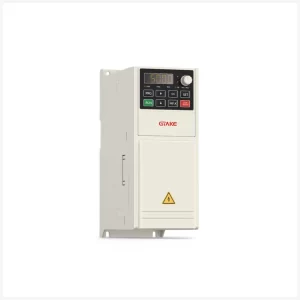
Key VFD Control Requirements for Elevator Systems
Elevator operation places several demands on the drive. The car must start without a noticeable jerk, maintain a stable speed, and stop at the correct floor even when passenger loads change.
Smooth Acceleration and Deceleration
Passengers notice sudden changes in speed, particularly when an elevator starts or stops. Abrupt acceleration can cause discomfort, while poorly controlled deceleration can affect stopping accuracy.
A drive with an adjustable S curve acceleration and deceleration profile helps control these transitions. Instead of changing speed abruptly, the drive adjusts the rate of acceleration over time.
When selecting an elevator VFD, check for:
- Adjustable acceleration and deceleration times.
- Flexible S curve programming.
- Stable speed control during low speed operation.
- Compatibility with the elevator controller.
The S curve settings should be adjusted during commissioning to suit the motor, traction system, and required travel profile.
Starting Torque and Anti Rollback Control
Starting an elevator is not as simple as accelerating an unloaded motor. Passenger numbers and cargo weight change the load carried by the car, while the counterweight affects the torque required from the motor.
An unsuitable drive may struggle to produce sufficient torque at low frequency. Poor coordination between motor torque and mechanical brake release can also allow the car to move slightly before normal travel begins.
Look for a drive with sufficient low frequency starting torque and responsive torque control. The elevator controller should coordinate torque buildup with brake release to limit rollback.
For demanding applications, also check whether the system supports load weighing and pre torque compensation.
Speed Control and Floor Leveling
A comfortable elevator ride depends on more than reaching the destination floor. The car must slow down at the correct point and approach the landing at a controlled speed.
The elevator controller normally manages position detection and leveling commands. The VFD follows the speed references and adjusts motor output during the final approach.
When comparing drives, check speed regulation, low speed performance, and compatibility with the position feedback system. A drive’s stated speed accuracy should not be confused with the actual floor leveling accuracy of the complete elevator.
Open Loop and Closed Loop Vector Control
The choice of motor control method depends on the elevator motor and the required performance.
Open loop vector control estimates motor speed and torque without encoder feedback. It can provide good starting torque and speed regulation in applications designed for sensorless operation.
Closed loop vector control uses encoder feedback to monitor motor speed. The additional feedback can improve control where the elevator requires more precise speed regulation or operates under demanding conditions.
Neither method is automatically suitable for every elevator. Check motor compatibility, control requirements, and the manufacturer’s technical documentation before making a decision.
Braking and Regenerative Energy
Elevators can generate electrical energy under certain load and travel conditions. For example, a heavily loaded car traveling downward may drive the motor into a generating state.
Two common ways to manage excess energy are:
- Braking resistor: Dissipates excess electrical energy as heat.
- Regenerative unit: Converts suitable regenerative energy into electrical power that can be returned to the supply.
The choice depends on elevator loading, travel frequency, drive configuration, and energy management requirements.
A VFD’s electrical braking function does not replace the mechanical brake. The mechanical brake and independent safety circuits remain essential parts of the elevator system.
VFD Control Requirements for Escalator Systems
Unlike elevators, escalators usually run continuously and carry passengers along a fixed route. Their drive requirements focus on stable operation, starting performance, and adapting to changes in passenger traffic.
Smooth Starting and Continuous Operation
An escalator motor may operate for long periods, particularly in shopping centers, airports, and public transport stations.
The VFD must handle the specified operating load without frequent trips or excessive heating. Smooth acceleration also helps reduce mechanical stress on the drive system.
Before selecting a drive, check its rated output current, overload capacity, cooling requirements, and suitability for the expected duty cycle.
Speed Control Based on Passenger Traffic
Passenger demand varies throughout the day. During quieter periods, some escalator systems use reduced speed or standby operation to avoid running continuously at full speed.
The operating sequence normally works as follows:
- A sensor detects an approaching passenger.
- The escalator controller processes the detection signal.
- The controller sends a speed command to the VFD.
- The drive adjusts motor speed according to the programmed settings.
The VFD performs the speed adjustment, while passenger detection and operating decisions remain with the sensor and control system.
Any reduced speed or standby function must comply with the applicable escalator safety requirements.
Energy Consumption and Drive Performance
Variable speed operation can reduce unnecessary energy consumption when passenger traffic is low. However, the actual savings depend on operating hours, passenger demand, motor efficiency, and mechanical losses.
For an existing escalator, compare energy consumption before and after changing the control strategy. A measured comparison provides a more reliable basis for evaluating the benefits than a general savings estimate.
Elevator VFD vs. Escalator VFD: Main Differences
Both applications use variable frequency drives, but their operating requirements differ.
| Control factor | Elevator VFD | Escalator VFD |
|---|---|---|
| Operating pattern | Frequent starting and stopping | Extended operation |
| Main requirement | Comfortable rides and accurate leveling | Stable running and passenger flow |
| Starting torque | High low frequency torque | Torque suited to starting and operating loads |
| Speed control | Acceleration, travel, and leveling | Normal and reduced speed operation |
| Braking | Coordinated electrical and mechanical braking | Controlled stopping |
| Energy management | Regenerative energy handling | Speed adjustment based on passenger demand |
A drive designed for general industrial machinery should not automatically be used in an elevator or escalator. Check the required control functions and system compatibility first.
How to Choose the Right VFD for Elevator and Escalator Applications
Once the application requirements are clear, the next step is to compare the actual drive specifications.
Match the Drive to the Motor
Start with the motor nameplate. Record the following information:
- Rated power in kW.
- Rated voltage and current.
- Rated frequency and speed.
- Motor type, such as induction or permanent magnet synchronous.
- Actual load and operating conditions.
Rated current is particularly important. Two motors with similar power ratings may have different current requirements, so selecting a drive by kW alone can lead to incorrect sizing.
Check Starting Torque and Overload Capacity
Review the drive’s starting torque at low frequency and its short term overload rating.
Elevators may require strong starting torque to handle load imbalance. Escalators need sufficient capacity for starting and continuous operation under the specified passenger load.
Compare these values under the same control mode and operating conditions. A percentage figure without its corresponding frequency, duration, or control mode provides limited information.
Check Control and Communication Functions
The drive must communicate correctly with the equipment’s main controller.
Check the available digital and analog inputs, relay outputs, encoder interfaces, and RS485 communication where required. Also confirm that the drive supports the motor control method specified by the equipment design.
A capable Variable Frequency Drive manufacturer should be able to provide product manuals, wiring information, parameter references, and application support. These documents are particularly useful when integrating a new drive into an existing control system.
Consider Installation Conditions
The electrical cabinet and operating environment also affect drive selection.
Check ambient temperature, ventilation, humidity, installation altitude, and available cabinet space. Review the manufacturer’s derating instructions if the drive will operate outside its standard conditions.
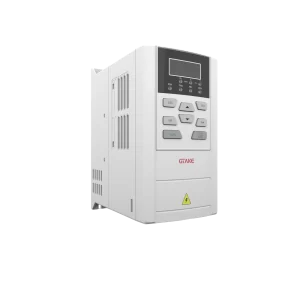
GTAKE GK620E for Elevator Applications
For elevator projects, an application dedicated drive can simplify the selection process because its functions are designed around elevator operating requirements.
The GK620E Variable Frequency Drive from GTAKE is designed for passenger and freight elevators in residential buildings, shopping malls, and office buildings.
Its published specifications include:
| Parameter | GK620E specification |
|---|---|
| Speed accuracy | ±0.2% in sensorless vector control modes 1 and 2 |
| Starting torque | 180% at 0.25 Hz in sensorless vector control mode 2 |
| Starting torque | 150% at 0.5 Hz in sensorless vector control mode 1 |
| Torque response | Less than 10 ms in sensorless vector control modes 1 and 2 |
| S curve control | Flexible programming |
| Overload capacity | 150% for 1 minute, 180% for 10 seconds |
GTAKE also specifies ±0.5% speed accuracy under V/f control. The figures above apply to their respective control modes and should not be treated as interchangeable.
The GK620E supports programmed floor leveling under open loop control, which can reduce the need for additional devices in suitable installations.
For further technical details, see the GK620E Variable Frequency Drive for Elevator and Escalator. GTAKE also provides information about its wider elevator solutions.
For general industrial equipment, the GK310 VFD offers open loop vector control and supports asynchronous and synchronous motors. Its suitability should be assessed against the actual application requirements rather than assumed from its general motor control performance.
Frequently Asked Questions About Elevator and Escalator VFDs
What Is the Difference Between an Elevator VFD and a Standard VFD?
An elevator VFD is designed around requirements such as smooth starting, low speed torque control, floor leveling, and brake coordination. A standard VFD may not provide all the functions required by an elevator control system.
Does an Elevator VFD Require an Encoder?
No. Some elevators use sensorless vector control, while others require encoder feedback for more demanding speed control. The motor and elevator control design determine which method is appropriate.
Can a VFD Reduce Escalator Energy Consumption?
Yes. Variable speed operation can reduce unnecessary energy use during periods of low passenger demand, provided the escalator control system and local safety requirements allow it.
Can a VFD Replace the Mechanical Brake in an Elevator?
No. The VFD controls motor operation and electrical braking. The mechanical brake and independent safety circuits remain necessary for elevator safety.
Conclusion
Elevator and escalator applications place different demands on a VFD. Elevators require sufficient starting torque, smooth acceleration, accurate leveling, and coordinated braking. Escalators need stable operation, suitable load capacity, and speed control that responds to passenger demand.
Before choosing an AC frequency drive, check the motor ratings, control method, overload capacity, braking requirements, and communication functions. For application details or technical support, visit GTAKE or contact the team.