GTAKE develops EV motor controllers and EV motor control units for different electric mobility applications, including electric passenger vehicles, commercial vehicles and special-purpose vehicles. The controller portfolio supports different vehicle power and voltage platforms, with modular architectures designed to simplify integration into different electric vehicle drive systems.
The low speed passenger car drive solution is designed for the electric drive systems of pure electric passenger vehicles, logistics vehicles and special vehicles. The current solution specification defines a rated electric drive power range of 13kW to 40kW and a battery DC voltage range of 50V to 180V.
For different vehicle configurations, the solution can support permanent magnet synchronous motors and AC asynchronous motors. GTAKE also applies modular N+N architectures to its new energy vehicle controller solutions, supporting configurations such as a single master drive, a master drive with multiple auxiliary units, and combinations of multiple accessory drives.
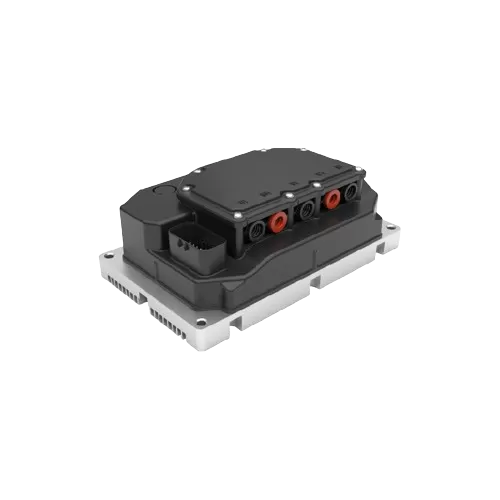
As a key component of the vehicle powertrain, the low speed EV motor controller regulates the electrical power delivered from the battery to the traction motor according to vehicle control signals and motor operating conditions. This allows the controller to coordinate motor speed, torque and power output while communicating with the vehicle management system.
Low Speed Electric Vehicle Applications
The low speed electric vehicle motor controller solution is intended for electric vehicles that require compact motor control, flexible battery-voltage matching and stable operation across different driving conditions.
Typical applications include:
- Pure electric passenger vehicles
- Electric logistics vehicles
- Electric special-purpose vehicles
- Low-speed commercial mobility vehicles
- Other compact electric vehicles with compatible voltage and power requirements
For vehicle manufacturers, the solution can be configured around the required battery voltage, drive-system power, motor type and vehicle control architecture.
Electric Vehicle Drive System
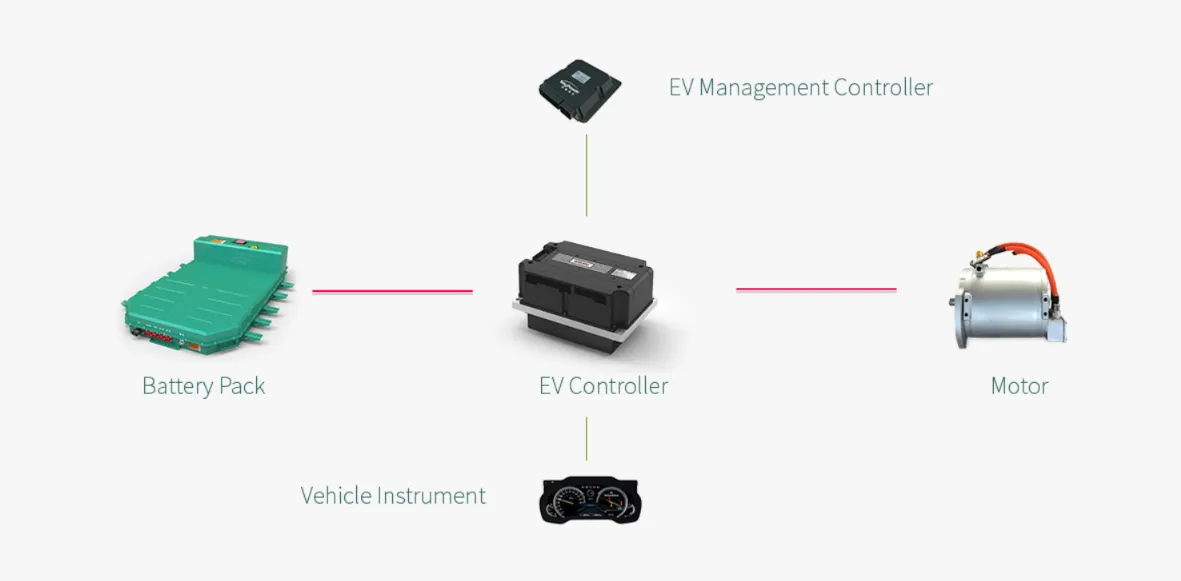
A typical electric vehicle drive system integrates the battery pack, EV controller, traction motor, EV management controller and vehicle instrument.
Battery Pack → EV Controller → Motor
The battery pack supplies DC electrical power to the drive system. The EV motor controller converts and regulates this electrical power according to vehicle control commands and motor feedback, controlling the motor’s speed and torque.
The EV Management Controller provides vehicle-level control and communicates operating requirements to the drive system, while the Vehicle Instrument provides the driver with relevant vehicle operating information.
Through this architecture, the EV motor control unit acts as the key power-control interface between the battery and traction motor, helping achieve smooth motor operation, responsive torque output and coordinated vehicle control.
Vehicle Integration Considerations
When integrating a low speed electric vehicle motor controller, vehicle manufacturers should consider the complete electrical and mechanical system rather than controller power alone.
Important parameters include battery DC voltage, motor type, required rated and peak output, motor position feedback, cooling method, communication requirements and controller protection level.
The controller should be matched with the battery pack and traction motor before finalizing the vehicle drive architecture. This helps ensure that the electric vehicle motor controller, battery system and motor operate within their specified electrical and thermal ranges.