A draw bench is a metal forming machine used for cold drawing, where metal is pulled through one or more dies to reduce its cross-sectional size or change its shape without applying heat. Draw benches are widely used in metal wire processing and can process both ferrous and non-ferrous metals into different profiles, including round, square, rectangular, triangular, half-round, L-shaped and oval sections.
Draw benches can be configured as automatic or semi-automatic machines. Depending on the machine design, multiple drawing cylinders are used to pull the metal through the dies, while the take-up section collects the processed material.
In modern draw bench applications, the drawing cylinders and take-up section commonly use AC drives to control motor speed. The cylinders and dies can be water-cooled, while braking devices can be installed on individual cylinders to support rapid starting and stopping.
Depending on the material and drawing process, drawing speeds can typically vary according to the machine configuration. During the drawing process, tension detection provides real-time feedback to the control system. The AC drive can then adjust the cylinder speed to maintain the required drawing conditions and help achieve consistent finished-product quality.
For this reason, a draw bench AC drive needs to provide coordinated speed control, fast response and suitable PID or feedback functions for the drawing and take-up sections.
Draw Bench AC Drive Control Overview
A typical draw bench uses multiple drawing cylinders to pull metal through a series of dies. Each cylinder needs to operate at a coordinated linear speed according to its mechanical position and the reduction produced by the corresponding die.
The AC drive control system can use the cylinder closest to the take-up section as the master speed reference. The speed reference is then transmitted through the other cylinders, while the tension feedback signal is used for PID correction.
This configuration allows the draw bench VFD or AC drive system to coordinate multiple motors while responding to changes in drawing tension.
Why Use GK820 AC Drive for Draw Bench Applications?
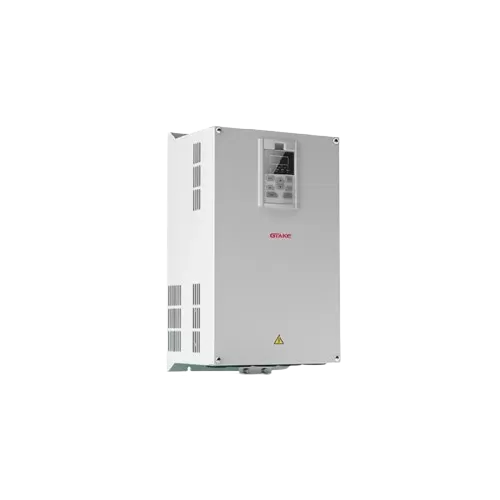
The GK820 High-performance AC Drive is designed for demanding motor-control applications that require precise speed control, torque control and fast response.
For a draw bench, these capabilities can be applied to several key control requirements:
- Drawing speed control for multiple cylinders
- Tension control through feedback and PID
- Coordinated speed control between cylinders
- Take-up motor control
- Speed correction based on tension feedback
- Multiple master command sources
- Sensorless vector and closed-loop vector control
- Encoder feedback for applications requiring feedback-based motor control
The GK820 product platform supports V/f, sensorless vector and closed-loop vector control, together with encoder feedback and process PID functions. These functions provide the control capabilities required by demanding industrial applications.