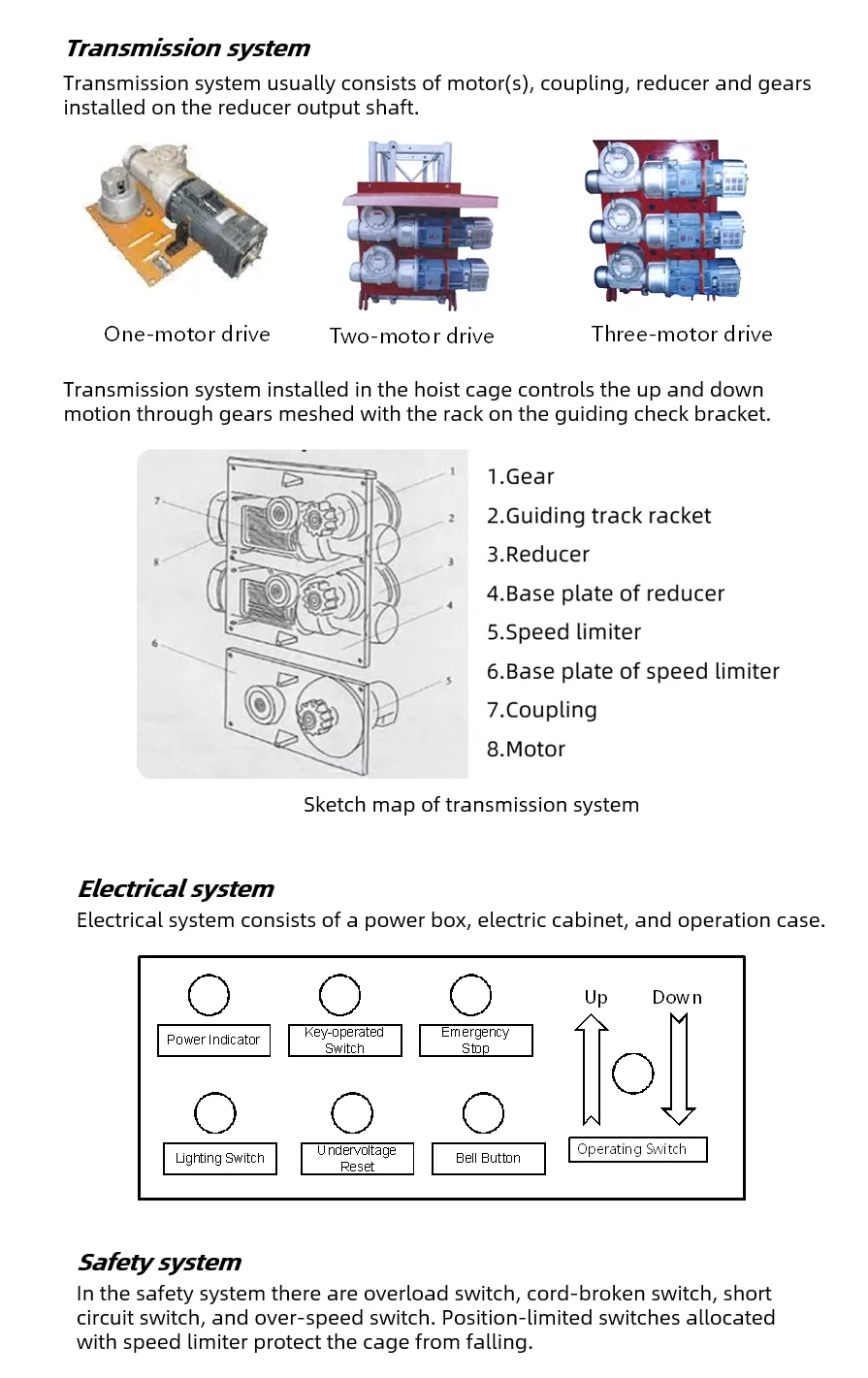
A construction hoist, also known as a personnel and material hoist, construction lift, man lift or temporary construction elevator, is widely used on construction sites to transport personnel and materials between different working levels. Because a construction hoist frequently starts, stops, accelerates and decelerates under changing loads, its motor drive needs to provide stable speed control, sufficient starting torque and controlled braking.
A construction hoist VFD can regulate motor speed by adjusting the output frequency and voltage, helping reduce mechanical shock during starting and stopping compared with direct contactor operation. For construction lifting equipment, the appropriate construction hoist inverter should be selected according to the motor rating, load characteristics, required lifting speed, braking requirements and control architecture.
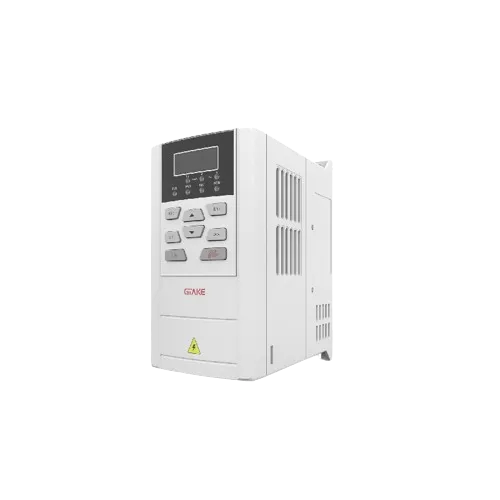
The GK620 General-purpose AC Drive supports V/f control and sensorless vector control and can be applied to cranes, lifts and other lifting equipment requiring adjustable AC motor speed and torque control.
Why Use a VFD for Construction Hoists?
A construction hoist AC drive can control the motor more progressively than fixed-speed contactor operation. This is particularly useful for lifting equipment that frequently performs repeated starting, acceleration, deceleration and stopping.
Key functions include:
Adjustable motor speed: The hoist motor speed can be configured according to the required lifting and lowering operation.
Controlled acceleration: Adjustable acceleration time can help reduce sudden mechanical loading during startup.
Controlled deceleration: Ramp-down control can provide a more controlled transition before stopping.
Starting torque: Sensorless vector control can provide higher starting torque for compatible motor and load configurations.
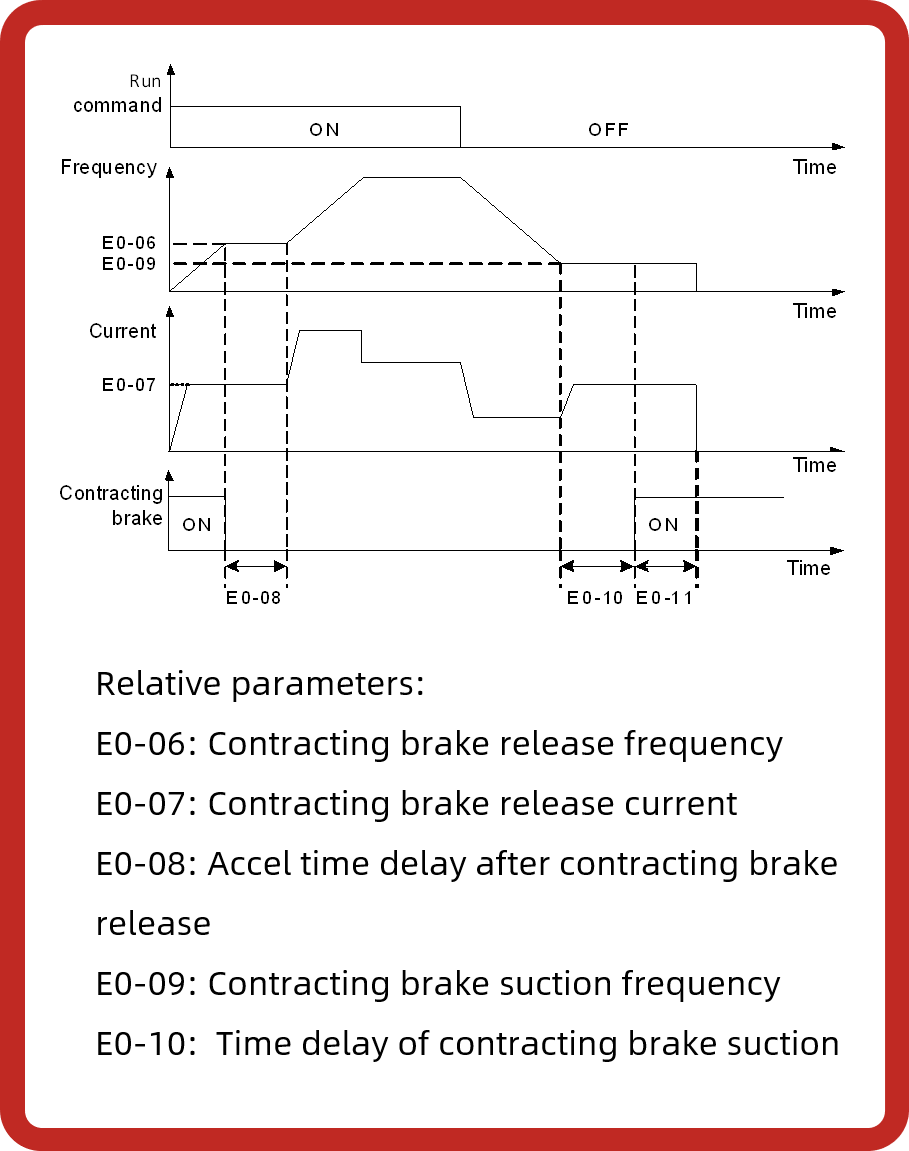
Braking control: Dynamic braking and mechanical brake control functions can be configured according to the system design.
Motor protection: The drive provides protection functions for electrical and motor operating conditions.
The actual safety of a construction hoist depends on the complete mechanical, electrical and safety system. The VFD is one component of the overall drive and control architecture and should be configured according to applicable equipment requirements and local regulations.
Variable Frequency Drive Solution
Industrial construction hoists vary in load-bearing capacity, lifting height, lifting speed and motor configuration. A suitable Variable Frequency Drive (VFD) can provide controlled motor acceleration and deceleration, adjustable operating speed and torque control according to the requirements of the hoist system.
A typical construction hoist may include safeguards and mechanical structures such as:
Enclosed cars
Multiple control points
Strong galvanized steel structures
Closed base enclosure
Safety locks
The drive system is another important part of the overall equipment architecture. Common motor drive methods include:
Drive methods
Driven directly by contactors
Driven by a frequency inverter / VFD
Comparison of the two drive methods
Item
By contactor
By frequency inverter
Impact to machinery
Huge
Small
Starting current
2~7 times rated current
1.2 times rated current
Speed range
None, or a fixed ratio
Above 1:100
Brake
Direct brake at full speed
Brake at a low speed
Working process
Big shock
Stable and comfortable
Advantages of GTAKE inverters
The GK620 AC Drive provides multiple motor-control and application functions that can be used for construction hoists and other lifting equipment:
High starting torque under sensorless vector control helps provide stable motor operation during heavy-load starting.
Fast torque response supports controlled motor operation when the load changes.
Built-in drive protection functions help monitor conditions such as overcurrent, overvoltage, undervoltage and overload.
Mechanical brake control provides configurable control functions for applications using an external mechanical brake.
A common DC bus can be used in suitable multi-drive system configurations.
Dynamic braking functions can be used where the application requires controlled dissipation of regenerated energy.
For applications requiring higher speed and torque precision, GK820 High-performance AC Drive supports sensorless vector and closed-loop vector control, encoder feedback and advanced torque and speed control functions.
Item
V/f, sensor-less vector control 1
Sensor-less vector control 2
Output torque at low Freq
180% output torque at 0.5Hz
180% output torque at 0.25Hz
Torque response
<10ms
Protection
Short circuit, undervoltage, overvoltage, overload, phase sequence
Contracting brake
Specific contracting brake param group, programmable
Brake
Brake unit for energy consumption, or AFE (active front end) for energy feedback with almost no harmonic
For applications requiring regenerative energy recovery, an appropriate braking or energy-feedback architecture should be selected according to the hoist’s operating cycle and system design.
Note: please select GK820 High-performance AC Drive when closed-loop vector control is required for higher speed, torque or positioning precision. GK820 supports closed-loop vector control, encoder feedback and advanced speed and torque control functions.
Variable speed drive selection when a couple of motors drive a hoist
When several motors are used to drive one construction hoist, the Variable Speed Drive (VSD) or VFD configuration should be selected according to the motor arrangement and control requirements.
Users can allocate one VFD for one motor. For example, if a hoist system uses three 11 kW motors, an appropriate AC drive can be selected for each motor according to the motor rated current and required overload capacity. In a suitable multi-drive system, a common DC bus can also be adopted.
Users can also consider one larger power-rating drive for multiple motors when the application and control architecture allow it. For the same example, three 11 kW motors have a combined rated power of 33 kW. If a 1.2 overload factor is used as a preliminary calculation, the required capacity would be:
3 × 11 kW × 1.2 = 39.6 kW
Therefore, a 45 kW drive could be considered as an example of a higher-rated drive. Final selection should be confirmed using the actual motor rated current, load characteristics, overload requirements, braking system and hoist control method.
GK620 AC Drive for Construction Hoist Applications
The GK620 General-purpose AC Drive is positioned as a general-purpose drive for industrial motor control and is listed by GTAKE for applications including cranes and lifts. It supports V/f control, sensorless vector control, adjustable acceleration and deceleration, dynamic braking, mechanical brake control, common DC bus and multiple frequency-setting methods.
For construction hoist manufacturers and system integrators, the GK620 can be considered when the equipment requires:
GTAKE provides several AC drive platforms for different industrial motor-control requirements:
GK620 General-purpose AC Drive — general-purpose motor control for cranes, lifts and other industrial machinery.
GK820 High-performance AC Drive — designed for applications requiring higher speed and torque control performance, including closed-loop vector control and encoder feedback.
GK900H Crane-Specific AC Motor Drive — dedicated crane-oriented drive platform with advanced crane control functions.
GK920 Book-type Versatile AC Drive — a versatile book-type AC drive platform that can replace GK620 and GK820 in suitable applications.
For construction hoists, the appropriate drive should be selected according to the motor configuration, lifting load, required speed, braking method and control precision.