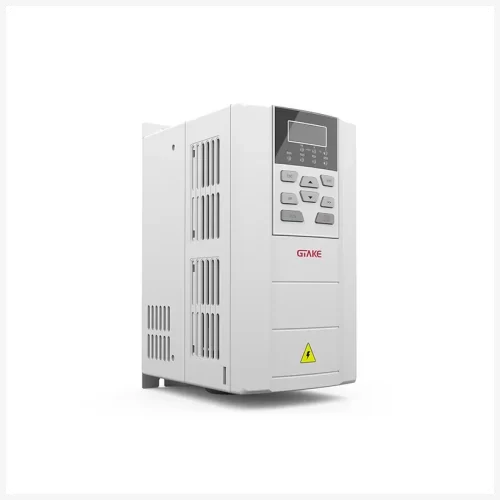
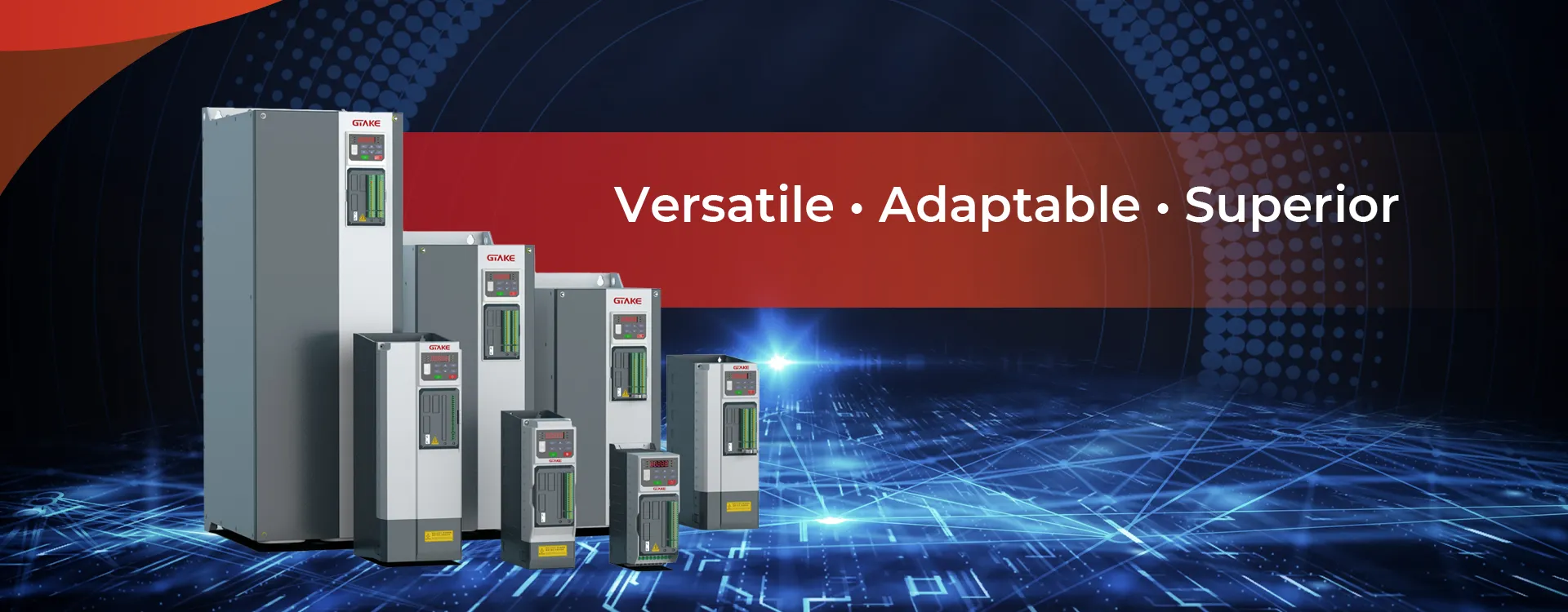
GTAKE Elevator Frequency Inverters are designed to regulate the frequency and voltage supplied to elevator motors, enabling controlled motor speed, acceleration, deceleration, and stopping. As a type of variable frequency drive (VFD), an elevator frequency inverter can adapt motor operation to different travel stages and load conditions, supporting smooth elevator movement, precise speed regulation, energy-efficient operation, and reliable motor control.
Variable Frequency Control for Elevators
An elevator frequency inverter changes the output frequency supplied to the elevator motor instead of operating the motor at a fixed frequency.
By continuously adjusting the motor’s operating frequency, the drive can create different speed stages during an elevator’s travel cycle.
A typical elevator movement may include:
Starting → Acceleration → Constant-Speed Travel → Deceleration → Leveling → Stop
The frequency inverter coordinates the motor’s output frequency with the required speed profile, allowing the elevator to transition between these stages in a controlled manner.
This makes variable frequency control an important technology for modern elevator motor systems.
How Frequency Control Affects Elevator Operation
The output frequency of an inverter directly influences the operating speed of an AC motor. Controlling this frequency allows the elevator system to establish different motor speed levels without relying only on mechanical control.
Low-Frequency Starting
During startup, the inverter gradually increases the output frequency rather than applying the full operating frequency immediately.
This provides controlled motor acceleration and helps reduce sudden mechanical impact during elevator starting.
Variable-Speed Travel
During normal travel, the inverter adjusts the output frequency according to the required elevator speed.
This enables multi-stage speed control for different elevator travel conditions.
Controlled Deceleration
Before reaching the target floor, the inverter reduces the motor frequency according to the programmed speed profile.
Controlled deceleration helps prepare the elevator for low-speed leveling and final stopping.
Low-Speed Leveling
During the final approach, the elevator motor operates at a lower frequency and speed.
Precise low-speed control can contribute to floor leveling accuracy and smoother stopping.
Elevator Frequency Inverter Performance
The performance of an elevator frequency inverter depends on more than its maximum output frequency. The complete control process needs to coordinate speed, torque, braking, and motor feedback.
Speed Regulation
Accurate speed regulation allows the elevator motor to maintain the required speed under changing load conditions.
This is particularly important when the elevator transitions between low-speed leveling and normal travel.
Acceleration Profile
The acceleration profile determines how quickly the motor reaches its target speed.
A properly configured elevator acceleration curve can reduce sudden changes in motor speed and contribute to passenger comfort.
Deceleration Profile
The inverter controls motor frequency during deceleration to create a predictable transition from travel speed to leveling speed.
The selected deceleration curve needs to match the motor, load, elevator speed, and mechanical system.
Torque During Frequency Changes
Frequency changes must be coordinated with motor torque.
Suitable torque control helps the motor maintain stable operation when the elevator accelerates, decelerates, starts under load, or changes operating conditions.
Frequency Resolution
Fine frequency adjustment allows the inverter to make smaller changes to motor speed.
This can be useful for applications requiring precise low-speed operation and elevator leveling.
Energy Efficiency of Elevator Frequency Inverters
An elevator frequency inverter can improve motor energy management by supplying the motor with the frequency and voltage required for its current operating condition.
Instead of continuously operating the motor at a fixed electrical condition, variable-frequency control allows motor operation to change according to the elevator’s movement.
Energy performance is also influenced by:
- Elevator load
- Travel distance
- Travel speed
- Acceleration and deceleration
- Motor efficiency
- Braking method
- Frequency inverter efficiency
- Regenerative energy management
For elevators with frequent braking and changing load conditions, regenerative braking can be considered as part of the overall energy-management architecture.
Braking and Regenerative Operation
During elevator deceleration, the motor may operate as a generator and produce electrical energy.
Depending on the elevator system, this energy can be handled through different braking configurations.
Dynamic Braking
A dynamic braking system dissipates regenerated electrical energy through a braking circuit when required.
This configuration can be used where controlled deceleration is needed and regenerative energy is not returned to the building power system.
Regenerative Braking
A regenerative elevator drive can convert regenerated motor energy into usable electrical energy for the system.
This approach can improve elevator energy efficiency, particularly in applications with frequent regenerative operating conditions.
Elevator Frequency Inverter Control Methods
Different motor-control technologies can be used with variable-frequency elevator drives.
V/f Control
V/f control maintains a defined relationship between motor voltage and frequency.
It provides a relatively straightforward method of variable-frequency motor control.
Sensorless Vector Control
Sensorless vector control provides more advanced control of motor speed and torque without requiring encoder feedback.
It can provide improved motor performance while reducing the need for additional feedback hardware.
Closed-Loop Vector Control
Closed-loop vector control uses feedback from the motor to improve speed and torque regulation.
It is particularly useful when an elevator system requires higher speed accuracy, positioning performance, and low-speed control.
Elevator Frequency Inverter Applications
The requirements for an elevator frequency inverter vary according to elevator type and operating conditions.
Residential Elevators
Residential systems typically emphasize quiet movement, smooth acceleration, low-speed control, and compact integration.
Passenger Elevators
Passenger elevators require consistent speed control, acceleration, deceleration, floor leveling, and ride comfort under changing passenger loads.
Commercial Elevators
Commercial elevators may experience frequent operation and changing loads. Their frequency inverter needs to provide stable performance over repeated travel cycles.
High-Rise Elevators
High-rise applications may require higher travel speeds and longer operating cycles, making speed regulation, torque response, braking, and motor thermal management important considerations.
Freight Elevators
Freight elevators typically operate with heavier and more variable loads. Starting torque, overload capability, frequency control, and braking performance should therefore be considered when selecting the drive.
Selecting a Frequency Inverter for an Elevator
The correct elevator frequency inverter should be selected according to the complete motor and elevator system.
Important parameters include:
Motor type → Motor power → Rated current → Elevator speed → Load → Starting torque → Feedback → Braking → Operating environment
Motor Compatibility
Confirm whether the system uses an asynchronous motor or PMSM motor and whether the inverter supports the required control method.
Frequency and Speed Range
Check the inverter’s output frequency range and ensure it covers the elevator’s required operating speed.
Overload Capability
Evaluate the drive’s overload capacity according to the maximum elevator load and starting conditions.
Feedback Requirements
Determine whether the application requires sensorless control or encoder-based closed-loop control.
Braking Requirements
Select the appropriate dynamic braking or regenerative braking configuration according to the elevator’s operating cycle.
GTAKE Elevator Frequency Inverter
GTAKE develops AC drives and motor-control technologies for industrial and new-energy applications, including dedicated solutions for elevator systems.
GK620E Elevator Dedicated AC Drive
The GK620E Elevator Dedicated AC Drive is designed for compatible elevator motor-control applications and supports the control requirements of passenger and freight elevator systems.
Its elevator-oriented functions can be used for speed regulation, acceleration and deceleration control, motor control, and elevator operation.
View the GK620E Elevator Dedicated AC Drive →
Elevator Frequency Inverter Resources
The application of variable frequency drives in elevators involves motor selection, frequency control, braking, feedback, and elevator system integration.
Explore related resources covering:
- Elevator VFD
- Elevator motor control
- Variable frequency drive technology
- Elevator speed control
- PMSM elevator motor
- Elevator regenerative braking
- Elevator floor leveling
- Elevator drive selection
FAQ About Elevator Frequency Inverters
What is an elevator frequency inverter?
An elevator frequency inverter is a variable-frequency motor drive that regulates the frequency and voltage supplied to an elevator motor, allowing controlled motor speed and torque.
Why do elevators use frequency inverters?
Frequency inverters allow elevator motors to operate at different speeds during starting, acceleration, travel, deceleration, and leveling instead of operating at a fixed frequency.
How does frequency affect elevator motor speed?
For an AC motor, changing the supplied frequency changes the motor’s operating speed. The inverter uses this relationship to control elevator movement.
What is the difference between an elevator inverter and an elevator frequency inverter?
Elevator inverter is a broader term for motor-drive equipment used in elevator systems. Elevator frequency inverter emphasizes the variable-frequency control function of the drive.
Can frequency inverters control PMSM elevator motors?
Yes, a compatible drive can control PMSM elevator motors when the required motor-control algorithm and feedback configuration are supported.
Does an elevator frequency inverter save energy?
Variable-frequency control can help optimize motor operation according to travel conditions. Overall energy savings depend on the motor, elevator load, travel profile, braking system, and inverter efficiency.
What is the role of regenerative braking?
Regenerative braking allows electrical energy generated during certain deceleration conditions to be managed or recovered rather than simply dissipated as heat.