

Magnetic bearing blowers are becoming a preferred solution in industries such as municipal wastewater treatment, material conveying, and chemical processing because of their high efficiency, low noise, and oil-free operation. Unlike conventional blowers, these systems rely on high-speed permanent magnet motors supported by magnetic bearings, which require precise speed regulation. Therefore, a variable frequency drive (VFD) is essential because it supplies adjustable frequency power that allows accurate control of motor speed, airflow, and pressure. By matching output to real demand, VFD control helps reduce energy consumption while maintaining stable process conditions.
System Overview: How Magnetic Bearing Blower Systems Work
A magnetic bearing blower typically consists of a magnetic bearing system, a high-speed motor, an air compression unit, and an intelligent control platform.
First, the magnetic bearing system uses electromagnetic force to suspend the rotor in the air, enabling contact-free rotation. As a result, mechanical friction is eliminated, which reduces wear, maintenance needs, and energy loss.
The drive system usually employs a high-speed permanent magnet synchronous motor. This motor depends on a VFD to deliver variable frequency current, which creates a rotating magnetic field that drives the rotor at very high speeds.
Finally, the control and monitoring system uses sensors and processors to track operating conditions in real time. This integrated design ensures stable airflow output and safe operation across changing loads.
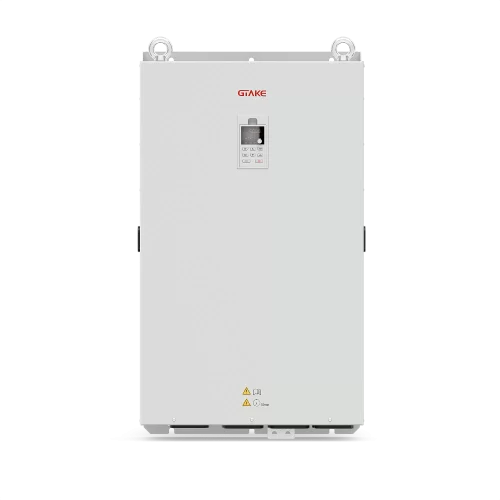
Control Architecture: Coordinated Operation of Controllers, PLC, and VFD
Control architecture of a magnetic bearing blower involves several coordinated components. Initially, a dedicated magnetic bearing controller stabilizes the rotor and maintains levitation. Without this step, safe operation would not be possible.
After levitation is established, an operator interface or supervisory system sends commands to a programmable logic controller (PLC). The PLC then issues start, stop, and speed commands to the VFD. In response, the VFD adjusts output frequency and voltage to control motor speed precisely. This layered control approach allows the blower to respond quickly to process changes while maintaining system protection.
Key Configuration Considerations for High-Speed Applications
Selecting the correct VFD and motor configuration is critical for reliable performance. High-speed magnetic bearing motors typically operate at very high rotational speeds and frequencies, which place special demands on the drive system.
For example, the VFD must support high output frequency ranges and strong current capacity. Adequate cooling, electromagnetic compatibility, and protective functions are also necessary to ensure stable operation. Proper parameter setup during commissioning further helps prevent overload, overheating, or instability during continuous operation.
Performance Advantages of VFD-Driven Magnetic Bearing Blowers
Integrating VFD technology with magnetic bearing motors provides several practical benefits.
First, significant energy savings can be achieved because the blower speed adjusts according to actual demand rather than running at constant full speed.
Second, noise and vibration are greatly reduced. The contact-free design eliminates mechanical friction, while the VFD enables smooth acceleration and deceleration.
Third, productivity improves because high-speed capability allows greater airflow output when needed, enhancing treatment efficiency in applications such as aeration systems.
Finally, system reliability increases due to built-in protections in modern VFDs, including safeguards against overcurrent, overvoltage, and overheating.
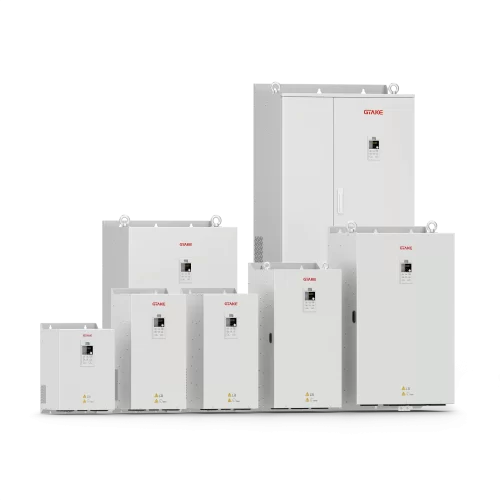
Typical Application Scenarios
Equally important, these advantages make VFD-driven magnetic bearing blowers suitable for many industries. Common applications include municipal and industrial wastewater aeration, flue gas treatment systems, pneumatic conveying, food and pharmaceutical processing, and chemical manufacturing. In each case, precise airflow control and energy efficiency are key operational requirements.
Future Outlook: Toward Intelligent and Sustainable Operation
Looking ahead, the combination of magnetic bearing technology and advanced VFD control is expected to move toward greater intelligence and connectivity. Digital monitoring, predictive maintenance, and automated optimization will further enhance efficiency and reduce operating costs. As industries continue to focus on sustainability, such high-efficiency drive solutions will play an increasingly important role.
Conclusion
In summary, a variable frequency drive is a core component in magnetic bearing motor blower systems. It enables precise speed control, improves energy efficiency, reduces noise, and enhances reliability. For facilities seeking modern, low-maintenance, and high-performance air supply solutions, adopting VFD-driven magnetic bearing technology is a practical and proven choice.
GTKE is committed to providing advanced drive solutions for demanding industrial applications. As a professional VFD manufacturer, GTKE offers reliable products designed for high-efficiency motor control, energy savings, and long-term stability. If you are looking to upgrade your blower systems or implement intelligent drive solutions, contact GTKE to explore customized options that meet your project requirements.