

In many industrial applications, selecting the right motor control device is essential for safe operation, long equipment life, and energy savings. This is why the comparison of Variable Frequency Drive vs Soft Starter is so important. Although both devices help motors start smoothly and reduce electrical stress, their functions and performance are very different. Understanding these differences helps engineers and users choose the best solution for their working conditions.
Why Motor Starters Are Needed
To understand the role of these devices, it is useful to begin with the basics. Induction motors draw a very high inrush current during startup because their winding resistance is low. This sudden current may be several times higher than the rated current, which puts stress on mechanical parts and increases the risk of electrical damage. Therefore, a motor starter is needed to reduce the initial current and protect the equipment. This is where soft starters and VFDs come in, but each one works in a different way.
What Is a Soft Starter?
After understanding the need for controlled motor startups, the first device to introduce is the soft starter. A soft starter is a voltage-control device used to reduce the high inrush current when a motor begins to operate. It works by gradually increasing the voltage supplied to the motor, allowing it to start smoothly instead of jumping to full speed immediately.
How Soft Starters Work
To achieve this smooth control, soft starters use semiconductor thyristors (SCRs). In a three-phase soft starter, six thyristors are connected in a back-to-back arrangement. Because soft starters reduce voltage during startup, the motor also produces lower torque. This is suitable for applications where heavy load torque is not required at the beginning, but it is less ideal for high-torque startup equipment.
Where Soft Starters Are Used
Soft starters are commonly used in:
- Pumps
- Fans
- Light-load conveyors
- HVAC equipment
These applications require smooth starting and stopping but do not need variable speed. Another benefit is that soft starters are cost-effective and easy to install, making them an economical solution for fixed-speed systems.
What Is a Variable Frequency Drive (VFD)?
While a soft starter only controls starting and stopping, a Variable Frequency Drive goes much further. A VFD adjusts both voltage and frequency, allowing full-range speed control throughout the motor’s operation. This is why the keyword Variable Frequency Drive vs Soft Starter is often discussed in energy-saving and process-control applications.
How VFDs Work
A VFD has three main sections:
- Rectifier – Converts AC input into DC
- DC Filter – Smooths the DC voltage
- Inverter – Converts DC back to adjustable-frequency AC
Because motor speed is directly related to frequency, the VFD can precisely control speed based on process requirements. This provides not only smooth startup but also efficient operation.
Modern VFDs include vector control, torque boost, overload protection, and many other advanced features. They offer strong low-frequency torque, making them suitable for heavy-load startup and demanding applications.
Where VFDs Are Used
VFDs are widely used in:
- Compressors
- Elevators
- Mixers and crushers
- Extrusion machines
- Production lines that need flexible speed control
- Energy-saving pump and fan systems
Any application that requires real-time speed adjustment or better process control benefits from a VFD.
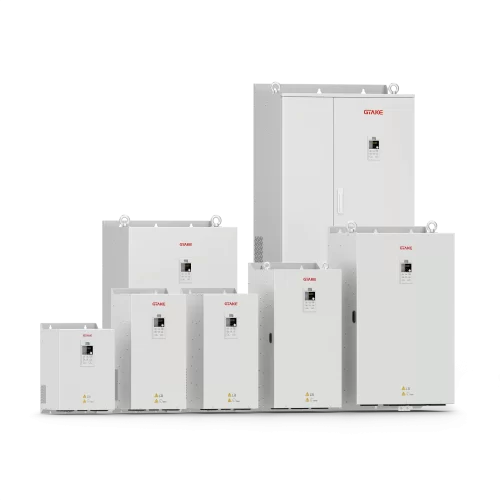
Variable Frequency Drive vs Soft Starter: Key Technical Differences
With a clear understanding of both devices, comparing VFD vs soft starter becomes easier.
Starting Performance
- Soft Starter: Reduces voltage, but torque is weaker.
- VFD: Uses low-frequency control, offering high starting torque and smoother acceleration.
Speed Control
- Soft Starter: No speed adjustment after startup.
- VFD: Full-range speed control during the entire operation.
Energy Savings
- Soft Starter: Saves energy only during startup.
- VFD: Saves energy during full operation by adjusting motor speed based on load.
Motor Protection
- Soft Starter: Basic protection such as overload and voltage drop.
- VFD: Advanced protection including overcurrent, overheating, short-circuit, and stall prevention.
Cost and Complexity
- Soft Starter: Lower cost, simple installation.
- VFD: Higher initial cost, but better long-term savings and performance.
When to Choose a Soft Starter or a VFD
Choosing between a VFD and a soft starter depends on the application needs.
Choose a Soft Starter If:
- The motor runs at a constant speed
- Only smooth startup and stop are required
- Budget is limited
- The load is light to medium
- Energy saving during operation is not a priority
Choose a VFD If:
- The process requires variable speed
- The application requires high starting torque
- Energy saving is important
- The equipment runs under changing load conditions
- You want stronger system protection and better motor life
Conclusion: Selecting the Right Motor Control Device
In summary, understanding the differences between Variable Frequency Drive vs Soft Starter is essential for choosing the right solution. A soft starter is ideal for smooth starting in fixed-speed applications, while a VFD offers full control, higher efficiency, and better performance in dynamic or energy-sensitive environments. The final choice depends on speed requirements, load characteristics, budget, and long-term operating goals.
If you are looking for a reliable VFD drive supplier to support your industrial systems, GTAKE is ready to help. We offer stable, efficient, and easy-to-use VFD solutions for various applications. Contact GTAKE to learn more about our VFD products and technical support.Feel free to reach out for expert assistance in choosing the right VFD for your system.