

In modern water supply systems, maintaining stable pressure is essential for efficiency, safety, and user comfort. Traditional pump systems often operate at fixed speed, which can cause pressure fluctuations when water demand changes. As a result, pipelines, valves, and pumps experience unnecessary stress and energy waste. Therefore, constant pressure water supply systems using a VFD pump control approach have become the preferred solution in residential, commercial, and industrial applications. By adjusting motor speed in real time, a variable frequency drive system ensures that water pressure remains stable while reducing energy consumption.
Basic Working Principle of a VFD Constant Pressure System
In a VFD-controlled pump system, a pressure sensor installed on the outlet pipeline continuously measures water pressure. The sensor converts this pressure into a standard electrical signal, typically 4–20 mA, and sends it to the drive controller. The controller compares the actual pressure with the preset target value and adjusts the motor frequency accordingly. Consequently, when water demand increases, the pump speeds up to maintain pressure; when demand decreases, the pump slows down to save energy. This real-time adjustment keeps the system stable and efficient.
Using the Built-in PID Controller Inside the VFD
Another key advantage of modern drives is the built-in PID controller designed for closed-loop applications. Instead of relying on external control hardware, the internal controller can directly process feedback signals from pressure transmitters. This integrated design reduces system complexity, lowers hardware costs, and simplifies installation. More importantly, it minimizes pressure deviation by continuously calculating the difference between actual and target pressure. The drive then adjusts output frequency to change pump speed smoothly. As a result, the system maintains constant pressure without excessive overshoot, which also contributes to energy savings.
Role of PLC in Multi-Pump Constant Pressure Systems
While a single pump system can be controlled entirely by a drive, large installations usually require multiple pumps operating together. In such cases, a PLC is often used for logical control and coordination. Specifically, the PLC manages pump start and stop sequences, monitors system status, and controls alarms. Meanwhile, the VFD performs fine speed regulation for the variable-speed pump. This division of responsibilities allows the system to respond efficiently to changing water demand. Additionally, PLC integration enables automatic switching between pumps, ensuring balanced operation and longer equipment life.
Automatic Pump Staging and De-Staging Logic
In multi-pump systems, automatic staging is essential for maintaining pressure during peak demand. When the variable-speed pump reaches its maximum frequency but pressure is still insufficient, the controller starts an additional fixed-speed pump. Conversely, when demand decreases and pressure becomes excessive, the system shuts down extra pumps step by step. Through this coordinated control strategy, the system achieves both coarse adjustment using fixed-speed pumps and fine adjustment using the VFD-driven pump. Consequently, water pressure remains stable while avoiding unnecessary energy consumption.
Pressure Signal Implementation Options
Selecting the right pressure feedback device also affects system performance. Standard pressure transmitters using a 4–20 mA signal are widely recommended because of their high accuracy and strong resistance to electrical interference. For simpler applications, electrical contact pressure gauges can also provide reliable signals at a lower cost. Regardless of the device used, accurate pressure measurement is the foundation of effective constant pressure control.

Energy-Saving Mechanism of VFD Pump Systems
Beyond pressure stability, energy efficiency is one of the main reasons for adopting VFD pump control systems. Traditional methods regulate flow by throttling valves, which wastes energy by creating artificial resistance. In contrast, a VFD adjusts pump speed directly, allowing the pump to produce only the required flow and pressure. Because pump power consumption decreases significantly at lower speeds, the system can achieve substantial energy savings. Furthermore, smooth acceleration and deceleration reduce mechanical wear, extending equipment lifespan and lowering maintenance costs.
Typical Applications of Constant Pressure VFD Pump Systems
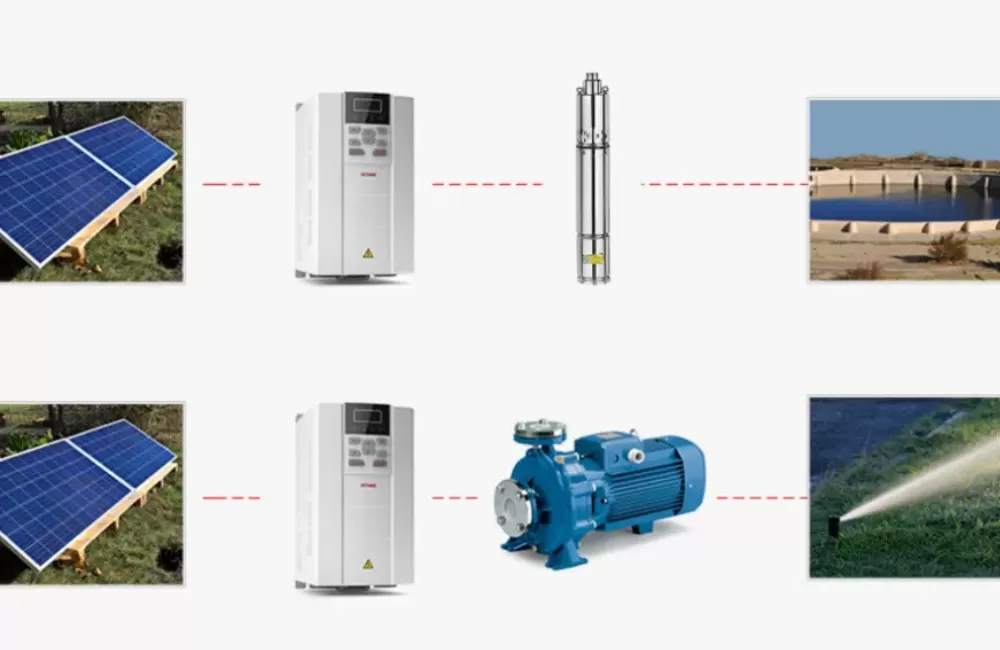
Given these advantages, constant pressure systems are widely used across many sectors. High-rise buildings rely on them to ensure stable water pressure on every floor. Industrial facilities use them for process water supply and cooling systems. Municipal water networks benefit from reduced leakage and improved reliability, while agricultural irrigation systems gain better control of water distribution. In all these scenarios, VFD pump control helps deliver efficient and dependable performance.
Conclusion: Why Integrated VFD Pump Control Is the Industry Standard
In summary, constant pressure water supply systems based on VFD technology combine precise control, energy efficiency, and operational reliability. By integrating pressure sensors, PID control, and PLC coordination, these systems adapt automatically to changing demand while protecting equipment from stress. As water supply requirements continue to grow in complexity, VFD-based solutions have become the industry standard for modern pump control.
If you are looking for a reliable solution to improve your water supply system, GTKE offers advanced VFD products designed specifically for pump applications. As an experienced provider in drive technology, GTKE delivers efficient, stable, and easy-to-integrate solutions that help reduce energy consumption and maintenance costs. Contact GTKE today to learn how our VFD systems can support your constant pressure water supply projects.