Email
Online Service

GK820 Series High Performance AC Motor Drives for Draw bench Application

A draw bench is a metal forming machine used for cold drawing, where metal is pulled through one or more dies to reduce its cross-sectional size or change its shape without applying heat. Draw benches are widely used in metal wire processing and can process both ferrous and non-ferrous metals into different profiles, including round, square, rectangular, triangular, half-round, L-shaped and oval sections.

Draw benches can be configured as automatic or semi-automatic machines. Depending on the machine design, multiple drawing cylinders are used to pull the metal through the dies, while the take-up section collects the processed material.

In modern draw bench applications, the drawing cylinders and take-up section commonly use AC drives to control motor speed. The cylinders and dies can be water-cooled, while braking devices can be installed on individual cylinders to support rapid starting and stopping.

Depending on the material and drawing process, drawing speeds can typically vary according to the machine configuration. During the drawing process, tension detection provides real-time feedback to the control system. The AC drive can then adjust the cylinder speed to maintain the required drawing conditions and help achieve consistent finished-product quality.

For this reason, a draw bench AC drive needs to provide coordinated speed control, fast response and suitable PID or feedback functions for the drawing and take-up sections.

Draw Bench AC Drive Control Overview

A typical draw bench uses multiple drawing cylinders to pull metal through a series of dies. Each cylinder needs to operate at a coordinated linear speed according to its mechanical position and the reduction produced by the corresponding die.

The AC drive control system can use the cylinder closest to the take-up section as the master speed reference. The speed reference is then transmitted through the other cylinders, while the tension feedback signal is used for PID correction.

This configuration allows the draw bench VFD or AC drive system to coordinate multiple motors while responding to changes in drawing tension.

Why Use GK820 AC Drive for Draw Bench Applications?

The GK820 High-performance AC Drive is designed for demanding motor-control applications that require precise speed control, torque control and fast response.

For a draw bench, these capabilities can be applied to several key control requirements:

  • Drawing speed control for multiple cylinders
  • Tension control through feedback and PID
  • Coordinated speed control between cylinders
  • Take-up motor control
  • Speed correction based on tension feedback
  • Multiple master command sources
  • Sensorless vector and closed-loop vector control
  • Encoder feedback for applications requiring feedback-based motor control

The GK820 product platform supports V/f, sensorless vector and closed-loop vector control, together with encoder feedback and process PID functions. These functions provide the control capabilities required by demanding industrial applications.

GK820 Series High Performance AC Motor Drives for Draw bench Application

Drawing speed

Drawing speed control: the speed of the cylinder close to the take-up part is treated as speed reference, while other cylinders shall, transmit speed in turn in accordance with their mechanical position (the PID output is also passed on to the next one). The speed relation of the cylinders:

Where K=1,2,3,… Vk is the linear speed of cylinder k. dk is the draw-out diameter of die k.

Tension Feedback for Drawing Speed Control

Tension is an important control variable in a draw bench because changes in material tension can affect the drawing process and the quality of the finished material.

A tension detection device provides real-time feedback to the AC drive. The drive uses this signal as part of the PID control process and adjusts the motor speed to compensate for changes in tension.

This allows the draw bench AC drive to combine master speed control with tension-based correction.

In a factory, the take-up section commonly uses two typical control modes:

  • Use a torque motor. When the weight or diameter of the take-up cylinder changes significantly, the take-up torque may need to be adjusted manually to maintain the required winding condition.
  • Use an AC drive to control the take-up motor. In this configuration, the movable cylinder provides a feedback signal to the AC drive, allowing the drive to perform speed and PID control. Once the system has been properly commissioned, the take-up process can be controlled automatically without continuous manual adjustment.

The second configuration integrates take-up motor control, speed regulation and feedback-based PID control into the drive system.

Solution with GTAKE GK820 series VSD

GTAKE provides a GK820 High-performance AC Drive solution for demanding draw bench applications that require coordinated speed control, tension feedback and fast motor response.

Cylinders

The GK820 High-performance AC Drive accepts multiple master command sources, including Modbus, Profibus-DP, CANopen, analog input and digital input.

The tension detection device sends its feedback signal to the drive through the analog input terminal. The GK820 AC drive processes the signal through its built-in PID function and uses the PID output as a correction to the master frequency command.

This allows the drive to regulate the speed of each drawing cylinder according to the required drawing speed and real-time tension feedback.

The control structure can therefore be summarized as:

Master speed reference → GK820 → cylinder motor speed control → tension feedback → PID correction

This configuration is suitable for metal wire processing applications where multiple drawing cylinders need coordinated speed control.

Take-up part

If the take-up diameter at full load does not differ significantly from the initial unloaded diameter, the standard GK820 High-performance AC Drive can be used for take-up motor control in a similar way to the cylinder control.

If the take-up diameter changes significantly between the unloaded and full-loaded conditions, application-specific parameters may be required to accommodate the changing take-up conditions.

For draw bench applications with specific take-up requirements, the drive configuration and control parameters should be matched to the actual machine structure, motor characteristics and feedback method.

GK820 Series High Performance AC Motor Drives for Draw bench Application

Related Products

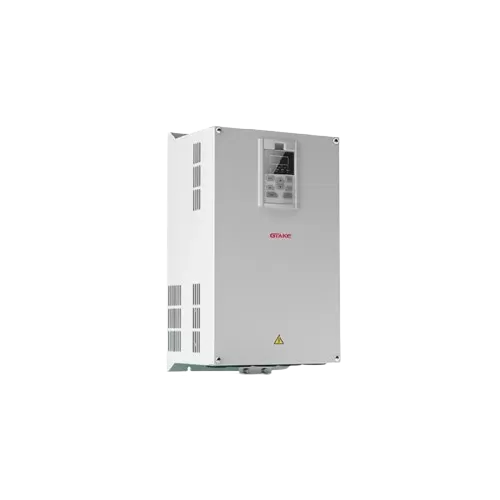
The GK820 High-performance AC Drive is GTAKE’s high-performance AC drive platform for demanding industrial motor-control applications requiring precise speed control, torque control and fast response.

For draw bench applications, GK820 can be used for drawing-cylinder control and take-up motor control according to the machine configuration. Its speed, torque, feedback and PID functions support coordinated motor control in metal wire processing applications.

The drive supports V/f, sensorless vector and closed-loop vector control, as well as encoder feedback and process PID functions.

Need Help? Send a WhatsApp message now

Click one of our representatives below

James
James

Marketing Support

Tonny
Tonny

Marketing Support

Frank
Frank

Marketing Support

Victor
Victor

Marketing Support

CHOOSE YOUR LANGUAGE
TYPE TO SEARCH

Fax:+86 755 86392625
Tel:+86 755 86392623
Tel:+86 755 86392601
Email:info@gtake.com.cn