

When discussing motor control in industrial applications, a quadrant-based variable frequency drive (also known as a four-quadrant VFD) is an important concept. Before going into details, it is useful to understand what “four-quadrant operation” actually means and why it is necessary for systems such as cranes, elevators, hoists, and other lifting machinery.
Understanding the Four Quadrants of Motor Operation
To begin with, the term “four-quadrant operation” describes how a motor can work in different combinations of torque and speed directions. In a coordinate system where motor speed and torque can be positive or negative, a four-quadrant VFD enables the motor to operate in all four possible states.
This capability is essential in applications where the direction and load conditions change frequently. The four quadrants can be summarized as:
- Forward motoring (Quadrant I)– speed and torque are positive.
- Forward generating (Quadrant II)– speed is positive but torque is negative.
- Reverse motoring (Quadrant III)– speed and torque are negative.
- Reverse generating (Quadrant IV)– speed is negative while torque is positive.
Each quadrant represents a different behavior of the motor, especially when load direction changes or when braking and regeneration occur.
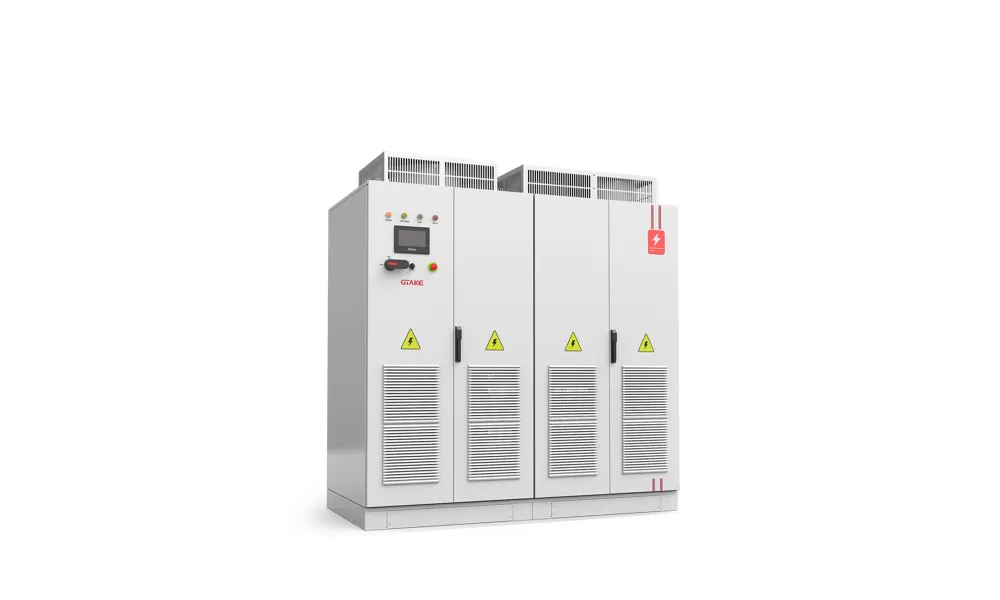
Quadrant I: Forward Motoring in a Four-Quadrant VFD
To understand how this works in a practical scenario, consider a quadrant-based variable frequency drive used in a lifting system.
At the start, the motor needs to lift a heavy load upward. During this process, the motor rotates forward and provides torque in the same direction as the rotation. This is a classic motoring operation, placing the system in Quadrant I.
A four-quadrant VFD controls acceleration, maintains stable lifting speed, and ensures smooth operation during upward travel. This quadrant is where most conventional VFDs can operate, but the other quadrants require more advanced design.
Quadrant II: Forward Generating During Braking
As the load reaches the desired height, the system must slow down and stop. At this moment, the motor’s speed temporarily exceeds the synchronous speed.
Because of this, the mechanical characteristic changes, and the motor begins to generate energy instead of consuming it. This regenerative braking mode pushes the system into Quadrant II, where speed is still positive, but torque becomes negative.
The motor now acts like a generator, feeding energy back into the power system or into a braking resistor. A four-quadrant variable frequency drive must be capable of handling regenerative energy safely and efficiently.
Quadrant III: Reverse Motoring (Accelerating Downwards)
> [Correction Note]: This section is revised to correctly reflect that Q3 is for accelerating down or driving empty hooks, not holding heavy loads.
When the system begins to lower the load, or when lowering a light load (empty hook), the motor must actively drive the mechanism downward to overcome friction and inertia.
In this condition, the motor rotates in the reverse direction and applies torque in that same reverse direction. Thus, both torque and speed become negative. This places the motor into Quadrant III.
In hoisting applications, this mode is typically seen during the initial downward acceleration phase or when driving the hook down without a heavy weight attached.
Quadrant IV: Reverse Generating (Controlled Lowering of Heavy Loads)
> [Correction Note]: This section is revised to show that Q4 is the main state for lowering heavy loads (holding them back).
This is the most critical operating state for lifting heavy loads. When a heavy load is being lowered, gravity pulls it down. Without control, the load would fall freely and accelerate dangerously.
To maintain a steady, controlled descent speed, the motor must apply torque against the direction of rotation (upward torque) to “hold back” the load, even though the motor is spinning downwards (negative speed).
Since the speed is negative but the torque is positive (opposing gravity), the system operates in Quadrant IV. Here, the potential energy of the falling load is converted into electrical energy. The motor acts as a generator throughout the descent, not just during the final stop. A four-quadrant VFD is crucial here to manage this continuous flow of regenerative energy back to the grid or braking units.
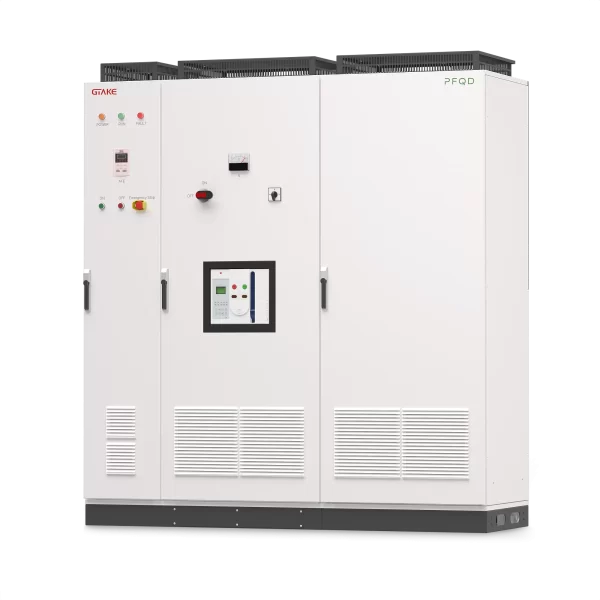
Other Applications of Four-Quadrant Power Control
Beyond motor control, four-quadrant power systems are also used to manage bidirectional current flow. The definition is simple:
- When the power source supplies current → current is positive.
- When the power source absorbs current → current is negative.
This explains why certain DC-DC converters operate in specific quadrants. For example:
- Buck/Boost converters that output positive voltage typically operate in Quadrant I.
- Inverting converters with negative output voltage often operate in Quadrant III.
Four-quadrant power supplies are also important for charging and discharging capacitive loads, as well as in electrochromic glass applications (such as those used in Boeing aircraft windows). The materials inside behave like capacitors during voltage changes, requiring a power system that can both source and sink current.
Conclusion: Why Quadrant-Based VFDs Matter
In summary, a quadrant-based variable frequency drive allows a motor to operate across all four torque-speed combinations. This capability is essential for equipment that involves lifting, lowering, braking, and energy regeneration.
Because not all VFDs support four-quadrant operation (specifically the ability to handle continuous regeneration in Quadrant IV), it is important to choose models specifically designed for these needs.
If you are looking for advanced motor control solutions or reliable frequency converter manufacturer support, GTAKE provides high-performance VFDs and motor controllers designed for demanding industrial applications.
Contact GTAKE to learn more about our four-quadrant drive technologies and customized solutions.